What If She Walks In?

When Religion Gets in the Way


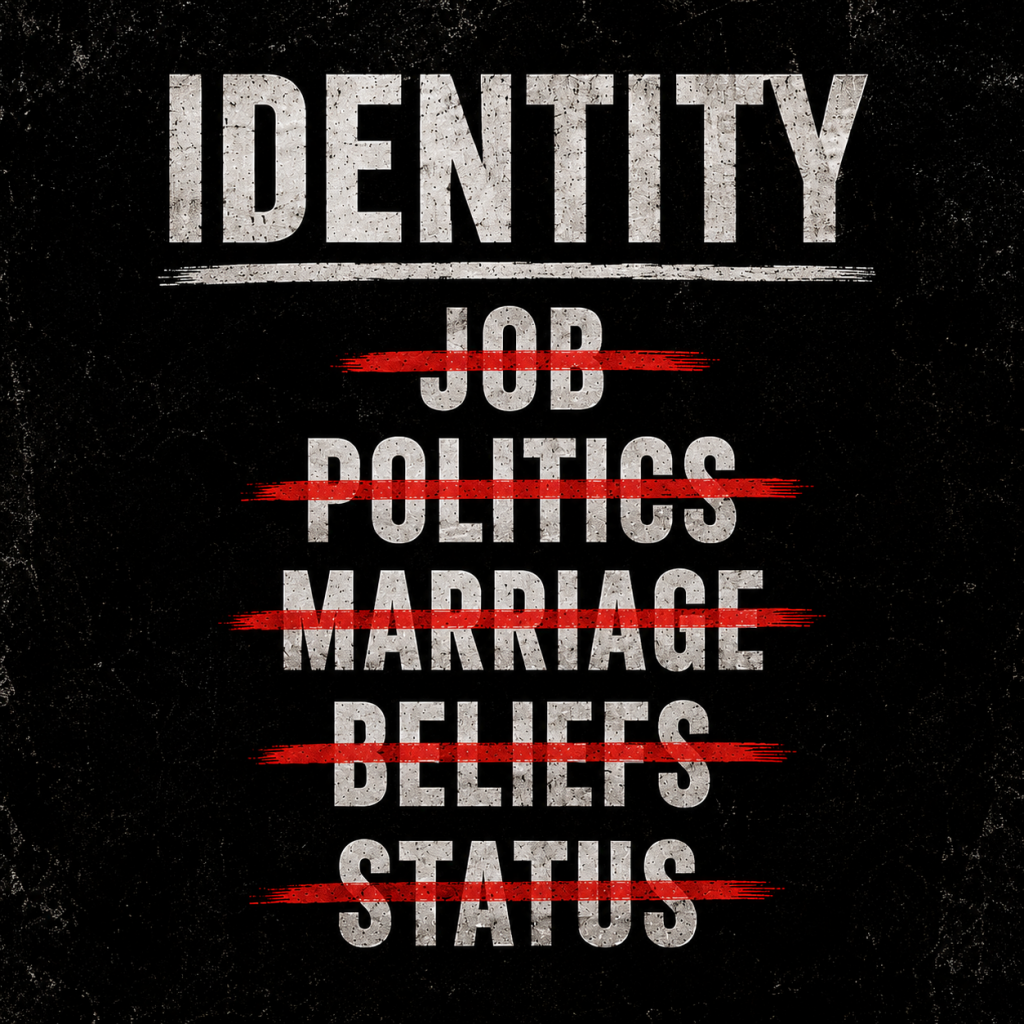
This picture has circulated with the headline, “Can this woman enter the church?” Here, I provide no fancy sentences. No backspaces or rewrites. No thought out linguistical creativity. Just typing as fast as I can, on purpose. This post took me almost the same amount of time to write it as it will for you to read it. Straight from the gut. No glitter. No empiricism. Just raw, lived experience with religion getting directly in the way of good decisions.

At First, Everything is Good

You find your favorite parking spot. You are greeted on the way in. You grab your latte. Hug a neck or two. You go in to find your favorite seat. The one you sit in every Sunday. It’s your comfort zone. From that seat, you look over and there’s the gentleman from the grocery store. Over there is the lady who found your dog after he got out. Right behind you is the family you’ve known since the husband and wife were children. Oh, and on the other side is your kids’ former baseball coach when they played little league. You’re comfortable there. These are your people. Then she walks in.

You know, the girl that you watched get arrested last week outside the grocery store for stealing formula. Or the one who you just knew was a bad apple. You told your daughter to never hang out with that girl. She was trouble. But here she is. By herself. Her face says she’s miserable. Her body says she’s been abused. Her hair says she just doesn’t care. But then there’s a tear. Her tears say she’s had enough.

Enough

Enough of whatever brought about this calamity. Enough of trying it the same way and hoping for different results. Enough of the constant drama. Enough crying herself to sleep, wondering what a peaceful night of sleep would be like. Enough looking over her shoulder for her abuser.

Then she sits down, not near your seat, but in your seat. The one you’ve sat in for 20 years. You can’t believe it. What do you do? What if she walks in and you’re faced with the fact that she knows you?

How Do You Respond?

If your response is anything other than sitting beside her, you need to revaluate where God wants you to grow right now. In this moment, she is fragile. She knows she doesn’t fit in. She was certain the moment she walked in she would get struck by lightning. But somehow, that didn’t happen. If you shun her, her preconceived notions about “church people” will be realized. If no one talks to her, her isolation will increase.

It’s in this very moment you must become the only Jesus she may see that day. You may be the only opportunity she gets to see exactly how Matthew felt when Jesus asked him to have a party at his house. You may be the only representation of what it felt like when Jesus told a fouled-mouthed fisherman named Simon to follow him. You may be the only shot she has to experience what it was like for Jesus to look up at Zacchaeus and ask to hang out with him.

What do you do with that opportunity? Do you squander it because you are uncomfortable? Do you miss out on using what God blessed you with? We are blessed to be a blessing, not to hoard it. Or do you introduce yourself? Maybe you hug her. Tell her it will be alright. Smile at her throughout the service. Tell her you’re glad she came and hopes she comes back.

The Difference May Be You

This small, short, simple interaction may be the difference in her life. How do I know? Years ago, two teenage boys saw something going on in their community and showed up. It happened to be a pop-up church service. As they entered, they quickly realized the place was pretty full. They turned to leave. An unassuming usher asked them if he could take a minute to find them seats. They obliged. Seats were found. By the end of the service, one of the boys surrendered his life to the calling he felt from God. This young man went on to be known as Billy Graham. One usher, a 15-second interaction. It changed everything.

You have no idea if that girl you once were repulsed by is the next worship leader somewhere. You don’t know if her calling is into the mission field to change countless lives. And either your kindness propels her in that direction, or your self-righteous religious dogma sends her the other way, back to how she got here in the first place.

A Call To Action

I urge you to wrestle with this scenario. Place yourself directly in this position. What would you do?

I once heard a man say, “I looked at God and I looked in the mirror and the two looked nothing alike.” If your response doesn’t look like Jesus, then this is your next step for growth. We all have areas for growth. This just may be yours.

Stay Classy GP!

Grainger

Mother Knew Best

It’s worth noting that while there are so many great mothers out there, some did not grow up with a good mom. For some it’s a source of pain to even consider. For them I say, there’s a good example to look to.

Picture it, Jesus is hanging out at a wedding. Just trying to enjoy his time. They run out of wine. Jesus’ mom, Mary goes over to Jesus and says, “They have no more wine.” I imagine there was a look that accompanied that phrase. You know the look. The one where a mom says, “your room still isn’t clean” then gives that look.

Then Jesus says, “why are you involving me in this? It’s not my time yet.” She all but ignores his insistence on remaining anonymous. She just turns to the servants and says, “Do whatever he tells you to do.”

The very first miracle Jesus performed took place because mother knew best. She didn’t listen to his desire to stay away. She knew his calling and didn’t let him sit idle.

This Mother’s Day, remembering Mary is a good idea. Her life was very difficult, yet very rewarding. And she embraced the role of a great mother till the very end.

Stay Classy GP!

Grainger

Moral Relativism: The Tyranny We Call Kindness

When Everything is Allowed, Nothing Works


James Orr and Freya India

In Case You Missed It:


I recently watched a podcast where James Orr discussed with Freya India the idea that therapy, and therapy culture, replaced morality. While I believe the current, overall culture of therapy is the location of toxicity in human behavior, which leads me to agree with their take, true therapy or counseling should operate from sound, objective realities, objective truths, and objective morality. The therapeutic endeavor itself isn’t the problem, it’s the improper application of it. When therapy abandons objective anchors, it stops being therapeutic and becomes permissive. It doesn’t heal, it pathologizes. Having said that, the conversation struck a nerve in the realm of moral relativism.


Moral relativism didn’t arrive like a catastrophe, it showed up like a shrug. Do whatever works for you. It’s your truth (which doesn’t exist). We’ve torn down shared moral boundaries and replaced them with personal preference, as if a society can survive on nothing but individual feelings. The psychological fallout is obvious. Confusion, anxiety, lack of direction, and a culture that can no longer tolerate discomfort without calling it trauma. It is the literal breeding ground for the epidemic of apathy we see in Gen Z.

Freya India said it bluntly,

“When everyone makes up their own morality, we end up in separate worlds.”

That’s exactly what this moment feels like. The inability to grip agreed upon values. How did we get there? By wanting the outcomes of moral discipline without the discipline itself. We want the fruits of sacrifice without the sacrifice. We want maturity without constraint. We bought the idea that anything which constrains destroys. The result is a generation that celebrates its authenticity but collapses under the slightest internal pressure.

This is what moral relativism produces. When everyone defines right and wrong according to personal preference, emotional comfort replaces morality. The fear of hurting someone’s feelings now outweighs the obligation to speak truth. People stay silent, not because they’ve thought deeply, but because they’re terrified of being called judgmental. Once emotional safety becomes the highest value, every other value gets downgraded. Responsibility looks oppressive. Boundaries look abusive. Expectations look cruel. Freya said,

“We have forgotten the word morals and replaced it with boundaries.”

Limitations as Liberation

Jordan Peterson, for years, has been saying that we’re being taught that all boundaries are tyranny. But a world with no boundaries isn’t free, it’s chaotic. Everyone understands this at the fundamental level. A child without boundaries becomes anxious. A marriage without boundaries falls apart. A society without boundaries dissolves into factions. And yet, somehow, we’ve convinced ourselves that moral boundaries are uniquely dangerous, while pretending the psychological fallout doesn’t exist.

Jonathan Haidt’s research shows how this plays out. When “safetyism”, or harm avoidance, becomes the highest moral priority, the definition of harm expands until anything can count. Expectations hurt. Standards hurt. Disagreement hurts. This inflated sense of fragility is exactly what we see now. We have a population that is both hyper-sensitive and chronically distressed. A terrible psychological combination. People can’t tolerate discomfort, and they can’t find stability. They’re told to look to the self for their moral compass, but the self is what got them here.

The symptoms are real. The rise in anxiety, the inability to commit, the paralysis around decision making, the hostility toward accountability. When nothing is objectively right or wrong, people don’t become liberated, they become overwhelmed. Every choice becomes existential because there’s no stable framework to lean on.

Freya went on to acknowledge something powerful. Society loves celebrating the milestone of marriage. 25 years. 50 years. But hates acknowledging what built it. Sacrifice, grit, restraint, discipline. Those things require boundaries, and boundaries are incompatible with relativism. If my values and your values are all that exist, then no one is allowed to say that any set of behaviors is necessary for a stable relationship. So we glorify the outcome and denounce the process. It’s delusional and dishonest.

Here’s the harsh truth. Boundaries don’t suffocate us, they stabilize us. They give us a structure to push against so we can grow. They keep our impulses in check so we don’t destroy ourselves. They give meaning to our commitments, weight to our promises, and direction to our choices. Remove them, and you don’t get freedom, you get fog.

The Results

And fog is exactly what we’re living in. A society that treats morality as personal preference will inevitably wonder why they feel so detached. Why kids are anxious. Why adults feel lost. Why relationships crumble. Why communities can’t agree on anything. Why we’re constantly offended yet never fulfilled.

We don’t have a cultural crisis of compassion, we have a crisis of clarity. People are starving for direction while being told that direction itself is oppressive. They’re collapsing under the weight of freedom because freedom without structure is psychologically unbearable. It’s too much choice without any grounding.

Our Next Move

We need to stop pretending that moral relativism is harmless. It’s not. It’s a psychological toxin. It produces confused individuals and fragmented communities. It destroys resilience. It undermines accountability. It dissolves meaning. It rewards fragility and punishes strength.

We need to reclaim objective standards. Not because we want control, but because humans cannot function without them. Children need boundaries. Adults need responsibility. Communities need shared expectations. Society needs a common moral starting point, or it will tear itself apart.

This doesn’t mean returning to some rigid, nostalgic fantasy. It means recognizing the psychological truth that people thrive under clear structure and crumble under limitless freedom. Our greatest liberties are found inside boundaries, not outside them.

We can keep pretending relativism works, or we can face reality. One path leads to stability, resilience, and meaning. The other leads exactly where we are now. Resentful, anxious, and foggy.

It’s time to choose.

Stay Classy GP!

Grainger

The Dirty “S” Word

Reclaiming a Biblical Concept the Modern World Can’t Stand

Grainger and Kelly Jackson


Grainger is a free-thinking writer with insights on modern fatherhood, relationships, and raising emotionally healthy kids, at the crossroads of psychology and spirituality. Multiple degrees in Psychology. Husband. Father. Counselor/Therapist.

Kelly Jackson is a Christian, wife, and mother who walked away from corporate success to follow a deeper calling. Through her work, she has supported hundreds of women through career shifts, nervous system stabilization, identity transitions, and the quiet work of legacy-building. Her mission is to help women return to what really matters in life.

Together, they bring you a difficult topic delivered at the intersection of compassionate kindness and unapologetic truth.


Kelly’s Message to the Ladies

Few words trigger a reaction like submission.

Say it out loud and watch shoulders tense. For many women, it conjures images of silence, shrinking, blind obedience, power misused. It sounds like erasure.

And if that’s what submission were, it should be rejected.

But the biblical vision of submission in marriage is not about domination or loss of agency. It is about order rooted in love, strength expressed through trust, and voluntary yielding within covenant.

A brief clarification: biblical submission only makes sense within a Christian worldview. If Scripture is not authoritative to you, we may not land in the same place—and that’s okay. This conversation is for those willing to consider God’s design on its own terms.

The Verse Everyone Quotes — And the Context They Skip

“Wives, submit to your husbands…” (Ephesians 5:22)

That line rarely stands alone in Scripture, though it often does online.

The verse immediately before it reads:
“Submit to one another out of reverence for Christ.” (Ephesians 5:21)

Submission in marriage does not begin with wives. It begins with both husband and wife submitting themselves under Christ. Wives are called to submit within a structure where husbands are simultaneously commanded to love as Christ loved the Church.

And Christ did not dominate the Church. He died for her.

The Weight of Headship

“Husbands, love your wives, just as Christ loved the church and gave himself up for her.” (Ephesians 5:25)

Biblical headship is not privilege. It is responsibility. It is leadership under judgment. A husband is called to lay his life down in tangible ways—through protection, provision, humility, and spiritual stewardship.

Any version of submission detached from sacrificial leadership is not biblical. It is distortion.

Scripture never authorizes a husband to demand what he refuses to embody.

What Submission Is

Submission is a posture, not a personality.

It is:

  • Trusting your husband’s leadership when he is seeking God
  • Choosing cooperation over competition
  • Yielding preference for unity
  • Respecting the role God designed
  • Allowing yourself to be led without disappearing

It is voluntary, not coerced.
Strong, not passive.
Intentional, not automatic.

Take the Proverbs 31 woman. She is not voiceless. She is wise, industrious, discerning, and respected. Her alignment does not make her small—it makes her steady.

What Submission Is Not

I want to be super clear, as I know many will be thinking about the extremes.

Submission is not:

  • Enduring abuse
  • Obeying sin
  • Silencing legitimate concerns
  • Abdicating discernment
  • Shrinking to protect ego

When commanded to comply with wrongdoing, the apostles responded: “We must obey God rather than men.” (Acts 5:29)

Submission never overrides obedience to God. It is not unquestioning compliance. It is not a command to tolerate harm.

Why the Word Offends Modern Culture

In a culture that treats power as something to seize and defend, submission sounds like loss.

But Jesus redefined greatness:
“Whoever wants to become great among you must be your servant.” (Mark 10:43)

Christianity frames strength differently. Voluntary yielding under God is not weakness. Christ submitted to the Father—and commanded storms.

It’s important to distinguish that submission becomes dangerous when demanded. But it becomes life-giving when freely offered within a marriage anchored in Christ.

When a husband leads with humility, a wife can yield without fear. When a wife responds with respect, a husband is strengthened in leadership. Neither weaponizes Scripture. Both submit first to God.

This kind of order removes rivalry. It replaces scorekeeping with trust. Marriage stops resembling a corporate ladder and begins reflecting covenant.

Biblical submission does not erase women. It steadies homes. Properly understood, it does not silence wives—it anchors marriages in something stronger than personal will.


Grainger’s Message to Men

Ok fellas. You’re not off the hook just because she said wives should be better at the “S” word. We need to be better also. First, the scripture Kelly mentioned in Ephesians 5, well, is your spouse worth dying for? Chances are you’d say yes. And if so, then are you worth submitting to? That depends on the aspect of leadership that you employ. If leadership to you looks like ruling, being the boss, and instructing, then no, you’re not worth submitting to. If it’s servant leadership, then maybe.

Reclaiming the Word Submission

The etymology of the word submission closely translates to the words under to send or let go. So I submit my life to the authority of my pastor. I am under him to be sent or to let go of total control. I told him, “If you’re following Jesus, I’m following you.” This doesn’t make me inferior. Weak. Spineless. Quite the opposite. It makes me meek, strong yet in control. So submission doesn’t mean your wife is weak, it means she is strong yet in control. I’m not following my pastor blindly. If he tells me to shave my head and move to Waco, TX, he is on his own. I’m not going. But if he leads biblically, I’ll follow; I’ll submit.

The Verse Everyone Quotes

Kelly said it well. We first submit to each other. And to the men, if you’re not worth submitting to or are leading in a direction not aligned with God’s word, there’s no biblical validity to her staying in such abuse. So please don’t try to use that against her. It won’t work if someone like me, who knows the Bible in and out, is around to debunk your narcissistic tendencies.

The idea here is bilateral submission. The wife submits (follows under to send while strong and in control or restraint) to her husband and the husband simultaneously submits to Christ, so much that he will lay his life down for her. Both must happen to be in alignment with God’s will for our lives. Unilateral submission is the breeding ground for disaster. Submission to Christ looks like chasing God first, then your spouse, then leading your children, in that order. And chasing isn’t passive, it’s intentional.

What It Looks Like to Lead

So what should she submit to? Leadership implies:

  • Someone is voluntarily following. If not, you’re dictating.
  • You’re taking someone from one place to another. If not, you’re managing.
  • Leading from underneath, allowing those you lead to take credit for the everyday wins. If not, you’re bossing.
  • Serving first and eating last. If not, you’re insecure.

What It Looks Like in Everyday Life

Initiate, Serve, Follow Through.

Initiate

Initiate getting the kids up in the mornings. Initiate getting the kids’ clothes out. Initiate fixing breakfast. Initiate praying with the kids and with your wife. Initiate being on time to church. Do not wait for her to take control of these situations if you are able to initiate it.

Serve

Serve her. What restaurant does she want to go to? What movie does she want to watch? What would make her evening less stressful? This leads to reciprocity. Women often respond to such initiation and service in the most generous of ways. Sometimes, they don’t even realize this is an innate part of them until they’re given the liberty to inhabit such freedom. It starts with you.

Follow Through

Follow through with what you say you will do. This is true for consequence, reward, or simply showing up. If you tell your children not to touch the TV and they do, and you do nothing, they have learned not to respect you and your word means nothing. Likewise, if you say you will be at their piano recital and you don’t show up, they learn you don’t really mean anything you say. However, if you do provide consequences, and you do show up to the recital, you are teaching them you are a man of your word, which mirrors the God we serve. He is a man of his word.

If I say I’ll meet you for coffee at 9 AM, and 9 AM arrives and I’m not there and you haven’t heard from me, you might as well call the highway patrol. I’m on the side of the road somewhere. I’m a man of my word 100% of the time. This applies to our spouses as well. If I say I’ll get the house ready for guests, I better get it ready (to her satisfaction, not mine).

Final Reflection

Before moving on, consider:

Ladies:

1. What immediate reaction does the word submission stir in you—and why?

2. Where might God be inviting you to release control as an act of trust and obedience?

3. How does viewing submission as a spiritual discipline—not a gender deficiency—shift your understanding?

Men:

1. What areas of your life need improvement in initiating, serving, or following through?

2. Where might God be inviting you to accept responsibility and make internal changes with external and eternal rewards?

3. How does viewing submission as a two-way street that begins with you serving her shift your understanding?

Stay Classy GP!

Grainger & Kelly Jackson

Don’t Throw the Message Out With the Mess-Ups

Logic Dies When Identity Speaks

Kid Rock & Bad Bunny

Do your best to read this with an open mind and an attempt to discover something new.


The Super Bowl halftime show was talked about more than the game. This has been the norm for the last few years. But this year, because of the strong political divide, there were two halftime shows. One for “each side.” This phrase alone is incredibly stupid to say. What’s a side? You have no side. They don’t care about you. And the fact that they’ve duped you into thinking you have a side that resembles any form of allegiance to you is stupefying.

So in come the predictable and tired political slogans and hateful rhetoric aimed at the “other side.”

“All Spanish! Yay diversity!”

“All Spanish?, we speak English!”

“It’s goIng to be sexy and lit!”

“It’s going to be vulgar!”

“Only thing more powerful than hate is love.”

“How many women does he love? His first song suggests too many!”

The next predictability were those praising the other halftime show. It was terrible. Lee Brice was ok. The others were very subpar. Until it got to Dr. Phil’s redneck cousin. Kid Rock was amazing. And I’m not a Kid Rock fan. Overall, it wasn’t a great show. But good luck telling that to MAGA.

“This was the best. Screw Bad Bunny!”

“I ain’t watching no Spanish show. ‘Merca!”

But the not so predictable part was when many turned on against Kid Rock for singing about Jesus.

The angle was that he, at one time, was a womanizer, and maybe even pedophile. There’s no evidence for the latter. But he was definitely the former. And wild. And crazy. And redneck. But like all people, we change. He did too, apparently. This takes me to my main point.

Tribalism Enters Center Stage

In one show, you have a man who is clearly currently a total womanizer who blatantly disrespects women and does an entire show about how every woman wants him and he does what he wants to them and leaves. But his most notable message was “The only thing more powerful than hate is love.”

On the other show, you have a character who has also ruffled some feathers, past and present, who ends up with a message saying “You can give your life to Jesus, till you can’t.”

Both artists controversial. Both have disreputable pasts. Both brought a strong positive message. This causes me to ask two questions?

  1. Why is one better (or worse) than the other?
  2. Why are we dismissing the message because of the messenger?

The only possible answer to the 1st question: Tribalism. And the answer to the 2nd question? See 1st question.

  • Solomon gave us the wisest book of the Bible.
  • King David gave us the most passionate book in the Bible.
  • Moses is the father of Jewish law and a foundational pillar of the Christian faith.
  • One left his first wife, hopped in bed with every chick this side of the Euphrates, decided to have multiple wives, who, eventually, were his downfall.
  • Another had an affair and killed her husband, who was his most loyal soldier, to cover up the affair.
  • Another killed a man because he got pissed off.

Do we throw their message out because of their mess-ups? I hope not. I have a lot of good things to say to help people live their best lives. But if you knew me in high school, you may not listen. Because I was a jack-wagon. Ernest Hemmingway and Robin Williams had plenty of good to say but ultimately couldn’t live by their own words. There have been many people in places of leadership that have positively altered the course of people’s lives, changing them forever, yet found themselves in a career-ending scandal.

There’s a strong psychological pull to dismiss a message once we discover flaws in the person delivering it. When someone lives inconsistently with what they teach, the instinct is to label everything they said as invalid. That reaction is understandable, but it isn’t always objective. Information can still carry value independent of the character of the person who delivered it. Sometimes the messenger is simply the vehicle. While the insight itself remains useful, constructive, or even transformative.

The tribalism has to end. There’s no real progress until we see through each other’s eyes.

I thank God every day there were no smart phones when I was in school. I thank God I’m forgiven. Thank God I’ve been given a second chance.

Don’t throw the message out with the mess-ups.

Stay Classy GP!

Grainger

Jesus Targeted Hearts, Not Systems

The Truth About Lies About Jesus


I know, I know. I said I wouldn’t write any more religious posts because too many religious people major on minors and miss the forest for the trees. But I saw a piece recently where a writer attempted to show us just how smart he was and exercise a moral authority that apparently he possesses and everyone else just sits in awe, awaiting his every wise word on how centuries of information derived from ancient texts should be viewed the way he says it should, in spite of the historical accuracy of said ancient texts, or you are simply wrong. (I’ve purposely chosen not to include his article, so he doesn’t get unnecessarily digitally doxed).

It always fascinates me how people spend so much time attempting to tear down mountains of archaeological evidence, lived experience, and structure that has clearly benefited society. This happens when people attack religion, and especially Christianity. I say especially, because it is the religion that is the most attacked in America.

I won’t go too deep here on this, but three major discoveries of ancient scrolls surfaced over time, each older than the previous finds. Each time, they were identical. This is almost impossible to achieve outside of authenticity. Scholars who specialize in ancient manuscripts don’t dispute the core documents used to assemble the Bible. The best resource I know for this information is Wes Huff. Moving on.

In this newest hit piece, the first problem I notice is the overwhelming desire to use the word Palestinian yet claim to be giving us a history lesson at the same time. Palestinian wasn’t a word used often in biblical times. It’s not a region. Not an ethnicity. Regardless, let’s glean from his “Four points of brilliance.”

#1. Jesus Wasn’t White.

“What most white Christians conveniently forget is that the real Jesus of Nazareth looked nothing like those Renaissance paintings.”

Who is most? No one believes he was. I literally know of no one that believes for one second that Jesus was “white.” He was Jewish. The idea that some may consider him white is pulling from, very possibly, one of the smallest samples in survey history. The only people claiming others say this are indulging in the very tired race baiting that permeates liberal white women.

#2. Jesus Was Political.

“You have to be especially ignorant of basic historical facts to believe that Jesus—who was literally executed by the state as a political threat under a placard reading ‘King of the Jews’—wasn’t political.”

The crucifixion was illegal. Neither the Romans nor the Jewish authorities actually had a solid legal case against Jesus. Nothing that justified an execution. Many expected him to lead a revolutionary style governmental revolt, but his teachings consistently pushed away from political insurrection. He instructed them to respect the government. His only real intersection with political authority was confronting the Pharisees, who had aligned themselves with Roman power to protect their religious structure, cultural traditions, and the limited individualism and autonomy they still retained.

“He proclaimed good news to the poor and liberation to the oppressed.”

Yes. To the individual.

“He warned the first would be last and the last would be first.”

Calling the individual to humble himself.

“He told parables of masters being overthrown by servants, kings being challenged, wealthy being cast down while hungry were fed.”

The aim was to cultivate humility. To remind the person that, apart from Christ, their standing is no greater than that of the beggar, and that wealth should remain a servant rather than a master.

“He rode into Jerusalem on a donkey in a deliberate parody of Roman imperial processions.”

This was prophesied in Zechariah 9:9 approximately 500 years before Jesus was here.

The four examples given under #2 were all directed to the individual. Never a systemic enterprise. His message challenged hearts, not institutions.

#3 His Message Wasn’t About Heaven or Afterlife.

“Recognize that the Bible is not a historically accurate transcript of what Jesus said

(Admittedly, this is very difficult for most people who have been brainwashed to believe almost from birth that the Bible is “the word of God” with no mistakes and practically a fourth member of the trinity).”

Brainwashed? Brainwashed to believe 2 Timothy 3:16.

Then he says,

“Feed the hungry, clothe the naked, liberate the oppressed, forgive debts, redistribute wealth.”

Nope. Redistributed wealth was never near his lips. And even if it were interpreted that way, His message challenged hearts, not institutions.

Jesus’ message about money wasn’t complicated. Many religious leaders in his time were corrupt, working with Roman authorities to protect their hierarchical power and status. They treated wealth like proof of spiritual favor. Jesus didn’t condemn wealth itself, he warned, either you govern money, or it governs you. His criticism was aimed at people, like the Pharisees, who were controlled by money.

Maybe my favorite part of this segment in the piece was the dismissal of validity due to the fact that John wrote his letters around 70 A.D. (Actually, he said 70 years after Jesus’ death. That’s not true. It was approximaely 35 years after). This was when they knew it had all been completed. Not when they believe he wrote it. But let’s assume “oh wise one” is right. We have texts on Alexander the Great. The first known writings about his life happened over 250 years after his death. But we believe it as undeniable truth. The inconsistency is astounding.

#4 Jesus Wasn’t Divine.

“This is the big one—and is probably most difficult for modern Christians to accept. The historical Jesus, the man who walked the earth 2,000 years—never actually claimed to be divine. That’s an invention of his later followers.”

This is the biggest reach. But it again denies the validity of 2 Timothy 3:16. This is to dismiss the expression of the trinity, the claim that got him killed, and the more than 300 prophecies from the Old Testament that he fulfilled. If Jesus was not divine, we are all doomed. I guess, “I am the way, the truth, the life. No one comes to the Father except through me” just slipped his mind.

Why It Matters

“It made Jesus into an object of worship, a ticket to heaven, a way to escape this world.”

No, it actually drew a line in the sand, called people up, demanded people do not give in to desires, pointed to a narrow road, gave hope to the hopeless, and solidified exactly why Jesus was here.

What this writer did was cherry pick the visions of the anointed, the intellectuals (who surely have no agenda of their own) and justified every carnal move and every principal they think writers in the Bible “just got wrong.”

This is how dangerous it is to be governed by our feelings. We will find things that aren’t there.

“The lies Christians tell about Jesus—that he was white, apolitical, focused on the afterlife, and divine—aren’t innocent mistakes. They’re a systematic reconstruction designed to make Jesus safe for power.”

“This afterlife-obsessed Christianity has served power perfectly throughout history.”

The reduction to power is the part that’s intellectually dishonest. As if the only motivation one could have for staying out of politics was for power. This is truly paradoxical to common sense playing out right in front of us. Many, if not most, get in to politics for power, not avoid it.

Growth Over Feelings

But why would someone take such pride in deconstructing the Christian faith using fallacies and feelings over centuries of fact? Because it doesn’t line up with the way he feels. It doesn’t just say, “Do exactly what you want. Your truth is superior to the truth.”

It calls you toward a peaceful life. Towards delayed gratification. To invest in the next generation. To be a person of moral character. Integrity. Consistency. This fosters personal growth. And that’s difficult and messy. When beliefs clash with personal preference, reinterpretation becomes tempting.

Ok, I’m done with this. It will likely call out every religious zealot that sits around all day thinking about whether Susan went all the way in (because we saw her hand sticking out) or if we need to schedule another baptism. Sheesh. I’m tired thinking about that.

Stay Classy GP!

Grainger

Single Awareness Day

Why Being You and Working On You Are Both Good


This is for my single friends.

When I was single I celebrated the hatred of Valentine’s Day. Literally got with other miserable young men and drank to the hatred of Valentine’s Day. I’m still not excited about the marketing pressure to make purchases you shouldn’t in order to meet cultural norms. It’s worse in dating than marriage. But still awful.

Here are some things I wish I knew when I was younger.

Why Do You Get Married?

If you marry because you love them, you’ll divorce them because you don’t love them. Love cannot and will not be a sustaining factor in marriage. It must be commitment. Commitment when it’s hard, messy, gross, frustrating, and truly no fun.

The work gets you through the tough times and makes the good times better than they have ever been.

Note: For Christians, you must marry someone solely because you believe God put this person in your path on purpose. What God put together let no man separate.

Marital Problems

Martial problems are rarely marital problems. They’re almost always singleness problems that never got dealt with.

Deal with you. Make you better. A partner won’t transform you. They will just exacerbate what’s already there. So put yourself in the strongest position possible before expecting success. Your relationship will never be successful if either of you are still broken.

Single Is a Whole Number

You aren’t a fraction of a person when you’re single. You aren’t second rate. Inferior. Missing out on life. You’re single. Some choose to stay single their whole lives. Some don’t. But if you’re someone who wishes you weren’t single, it’s ok. You won’t be forever. Just for now. If you rush, it will be a mistake.

What You Emit, You Attract

I had a daughter that at age 13 was posting sports bra pictures on Instagram. I sat her down and asked her what type of guy will like that post. She thought about it, and with honesty, said, “Boys that only care about one thing.” Yup.

“What kind of boy would respond to a post where you have a cute outfit on holding a cup of coffee and a Bible?” She said, “The marrying kind.” Yup.

The presentation you deliver into the world will equal the response you receive. If you give thot vibes, you will get thots in your DMs. If you give classy vibes, you’ll get classy in your DMs. Work on your presentation. And be the person you want.

Familiarity

There was a study done at Yale involving 3-month-old to 7-month-old babies. The experiment involved three phases: Good vs bad, same vs different, the first two combined.

Infant Morality

In the experiment, they performed a puppet show for the babies. A gray bunny was trying to open a box but was struggling. Along came an orange bunny and helped him finish opening the box. Next, while the gray bunny was trying to open the box, a blue bunny came along and abruptly shut the box door so the gray bunny couldn’t open it. They then presented the two bunnies for the infant to choose. Over 70% of the time they chose the good bunny.

Taste Buds Rule

Next, they presented two types of food. Cheerios and Golden Grahams. The baby selected. Then the green bunny chose the same food they chose, while the purple bunny chose the other food and saying they didn’t like the food the baby chose. Again, they were tasked to choose a bunny. Over 70% chose the bunny who chose the same food.

A Fork in the Road

Lastly, they took the green and purple bunny and placed them in the first scenario. The green bunny who chose the same food as the baby was the bad bunny (no, not the Super Bowl guy) who slammed the box down. The purple bunny who chose a different food was the good bunny. They were at a crossroads. Do they choose the good bunny who chose a different food or the bad bunny who chose the same food? The majority chose the bad bunny who chose the same food. Familiarity took priority over morality.

Be intentional in choosing the right person, not the familiar person. This explains why people choose abusive partners. I had a client in my office last week. First session. She tells me her ex-husband was abusive and she just broke up with an abusive man. I asked her how often her dad abused her. She just started sobbing. She had yet to mention her dad. She didn’t have to. She found what was familiar.

It’s why people go back to spouses that abuse them. It’s familiar. And I get why. New is scary. It’s unchartered territory. It’s unknown. It’s just much easier to go back to what we already know, even if what we know is not good for us. This is why we must surround ourselves with the right people who will support us in this transition out of what’s familiar and into what’s best.

DO NOT settle for familiar. In fact, don’t settle at all. You’re worth more. See your value the same way you value others.

Lastly, when you do find a partner, don’t make Valentine’s Day such a big deal. It’s just another way retailers found to market our emotions. I treat my wife like she’s a queen every single day of our lives. Therefore, when Valentine’s Day gets here, it’s just another day.

Stay Classy GP!

Grainger

I Forgive You

The Burden That Affects Only One


I have written about forgiveness before, but in response to an article and a cultural event that took place. You can see that HERE. This time, I want to make it personal. Because it is. Here’s my story. Try your best to respond to the call to action at the end.

I forgive you. Yeah you, the one who told me you would place me under investigation so that I would leave the company because you didn’t want any white people there.

I forgive you. Yeah you, the one who told me I would not get the job though I was most qualified because I was a white male.

I forgive you. Yeah you, the one who told me that the only way I’d ever be a good therapist was if I were to become a woman.

I forgive you. Yeah you, the one who went behind me, told outright lies, and got me removed from the band because you wanted full credit for any future success of that artist.

Aas far as I know, each one of those individuals above are still alive. But if they were deceased, it wouldn’t change the statement. I forgive them. Why?

Forgiveness is an internal dialogue. Though it is expressed externally. Forgiveness is you drawing a hard line in your own mind and body. This wound does not get unlimited access to my life. The injury happened, but it doesn’t get to run the system anymore. You’re telling your nervous system to stand down, telling your thoughts to stop orbiting the damage, and reclaiming the bandwidth that pain once consumed. From that point forward, you’re not drifting in reaction, you’re moving with intention. Focus replaces fixation. Direction replaces rumination. And your future stops being negotiated by your past.

My Experience

I was working at a large corporation. I had risen to the top 5 in the entire company in sales. I was being celebrated by many in the company that were not in my area. Meanwhile, in my area, there was a black woman that sat me down and told me a harsh truth. I had applied for a supervisor position leading a sales team. She said that she did not want me to get the supervisor’s position.

As a result, I did not get it. She told me it was because she wanted her black female friends to get it because we need more “diversity.” Diversity had come to be known as non-white. She said, and I quote, “The last thing this company needs is more white men telling black people what to do.” Another supervisor’s position became available. I applied again. This time, someone above her stated that being top 5 in the company means something and that he was giving me a shot. But I had to work for “her.” As soon as I got the job, she told me that she would see to it that I’m no longer there.

She had opened an investigation into another supervisor, a mixed male. Again stating that we need more females in the company. Shortly thereafter, she opened one on me, completely inventing infractions. My coworker sweat through it and hung on. I did not. I moved on.


I was in another industry. I went to the boss and discussed getting hired for certain positions. He plainly told me that we need more black people and that I would not get the job, “So don’t even bother applying.” I was more qualified and had more experience. It did not matter.


I’ve already written about this, but basically, I was in class and told that in order to be a good therapist, you have to be a woman. If you’re a man, you have to be feminine. You can’t be masculine in any way. But being a straight white Christian male made it impossible to be a good therapist and that I needed to rethink my career choices.


Each of these individuals left a mark on me. It stung. Each of these individuals was in a place of authority and, by default, I looked up to them. Each said what they said because they knew there were no repercussions. Being racist or sexists was perfectly acceptable as long as it was against white males. And I’m not the lawsuit type. I like the path of least resistance.

Fortunately, I’m surrounded by wise men and women. And these wise individuals encouraged me to see it for what it was; a power grab rooted in ideological homogeny centered around group think that has placed blinders over their eyes to the possibility that someone could disagree with them and be right. So I forgave them.

How Do You Know When You’ve Forgiven Them?

You know forgiveness has actually happened when their name stops having power over your nervous system. It comes up, a familiar scenario resurfaces, and there’s no spike. No heat. No internal recoil. Just neutrality.

My wife had to forgive her ex-husband and her father for years of harm. Today, when they’re mentioned, she doesn’t relive the story. She simply says she hopes and prays they’ve changed. That’s the difference. Forgiveness isn’t sentimental, it’s neurological. The person who once hijacked your emotions no longer lives rent free in your head. Their name becomes just a sound, not a trigger. And in that moment, you realize something radical. You’re no longer reacting. You’re choosing

Studies

There are studies showing a link between forgiveness and physical health. One such meta-analysis (Lee & Enright, 2019) showed forgiveness having a positive effect on the sympathetic nervous system, endocrine production, brain activity, blood pressure, cholesterol, and the immune system (N = 58,531, r = 0.14, p < 0.001).

Your Turn

Who do you need to forgive? Your story is likely much worse than mine. Murder. Rape. Molestation. Sex trafficking. Domestic violence. Psychological abuse. Malevolently turning the children against you. The list goes on and on. People do awful things at times.

You may be asking, “Why should I forgive them? They don’t deserve that.” And you would be right. They don’t. I don’t deserve the forgiveness I receive either. And neither do you. That’s why.

So I’ll ask again, who do you need to forgive? Don’t wait. Don’t put it off. Forgive them today, tonight. Even if you don’t have a way to tell them. Forgive them. Tell someone that you’ve done so. You will begin to feel a weight lifted off of your shoulders. Peace is achievable. But not with unforgiveness lurking in the background.

To my Christian brothers and sisters. Forgiving is not an option. It is a command. We are able to forgive others because God forgave us. Remember, we didn’t deserve the forgiveness God extended, no one does. So forgive.

One last time, Who Do You Need to Forgive?

Stay Classy GP!

Grainger

References

Lee, Y., & Enright, R. D. (2019). A meta-analysis of the association between forgiveness of others and physical health. Psychology & Health, 34(5), 626–643. https://doi.org/10.1080/08870446.2018.1554185

The Gospel of Fake Compassion

A Sermon On the Mount of Ideology, Where Truth is Blasphemy


In case you missed recent articles:


A former priest, a struggling comedian, and a delusional writer with diagnosed TDS (Trump Derangement Syndrome) walked into a bar. Bartender said, “Hey Father Nathan Monk!”

Who is that, you might ask? It’s not important. What is also not important is the truth, apparently. The only thing that matters is the nauseating eagerness to vomit out convenient lies. As long as the lies wrap everyone in a soft blanket of false comfort. As long as no one’s feelings are ruffled. Unless, of course, they dare to think differently. Then cruelty becomes a virtue. Then it’s open season. The same people preaching love, acceptance, and kindness sharpen their knives the moment disagreement enters the room. That’s who Father Nathan Monk is. “Empathy” is one-sided. It only resides with the in-group. And if you prefer facts over feelings, then you, my friend, are the out-group. Welcome to the circus. Let me show you around.

Highlights From One of His Recent Posts:

Empathy

So, you might be sitting here watching folks shrug off the death of another and saying, “How can you lack empathy? How can you lack understanding?” And I am asking you the very same question. How can you lack empathy and understanding for those whom he harmed?

I would even go so far as to say that having such empathy is good in a sense, it means you aren’t as vile as he, a man who couldn’t find empathy at all for anyone, and actually demeaned empathy as weakness.

Empathy is dangerous. That was his stance. That is my stance. That is psychologist Paul Bloom’s stance. That is Jesse Prinz’s stance, the professor of philosophy at the City University of New York. Empathy can never play a role in decision making. Especially major decisions, like policy. See what I mean herehere, and here. This isn’t new.

Charlie Kirk spent his life vilifying people.

Wrong. He said, “When people stop talking, that’s when you get violence. That’s when civil war happens.” He vilified ideas and policies, never people.

He turned their parents and siblings against them.

Another lie. What he actually said: “If You Don’t Fear Your Parents, You Don’t Fear God! Honor your parents.” – Kirk

Gender

He made using the restroom a battleground.

Kirk was in no such business. He refused to bow to the Marxist ideology that compels speech. He refused to repeat a lie that sex is not biological, there are more than two genders, and that kids, who can’t figure out how to tie their own shoes should be able to choose their gender and begin mutilating their body.

Race

He called Black people less than human.

There is zero evidence of this quote. The closest you’ll find is: “If we would have said that Joy Reid and Michelle Obama and Sheila Jackson Lee and Ketanji Brown Jackson were affirmative action picks, we would have been called racists. Now they’re coming out and they’re saying it for us … You do not have the brain processing power to otherwise be taken really seriously. You had to go steal a white person’s slot to go be taken somewhat seriously.”

In context, what he was saying was that affirmative action, which directly and openly discriminates against white people and Asians, was the only way they could have gotten into college, based on their own admissions. Another way I know this wasn’t about race was because he was referring to democrats. He did not refer to Carol Swain, Candace Owen, or Kimberly Klacik. Why? Because they were republicans. This was not about race to him. It was about discrimination. Against whites and Asians.

2A

In the wake of school shootings, he told parents that their children dying in the hallways was a necessary casualty of protecting the Second Amendment.

Not even close. Here’s the full quote:

I think it’s worth it to have a cost of, unfortunately, some gun deaths every single year so that we can have the second amendment to protect our other God-given rights. That is a prudent deal. It is rational.

In context, he said that we, as a society, have made decisions on cost-benefit analysis; cost vs. reward. Every year, 50,000 people die in car accidents. We have decided that those 50,000 deaths are worth the cost to receive the benefit of having vehicles at our disposal to enhance our lives. One life is too many, but we know there will be car deaths, yet we still don’t ban cars. The same can be said of guns. There will be no such era of zero deaths from guns. We have decided that some deaths are worth the cost of the benefit of being able to protect ourselves. First against a tyrannical government. Next against people who wouldn’t abide by a gun law under any circumstance.

Words ≠ Violence

-He fomented young people to become violent so that he could hide behind his words and demand nuance

-Countless people have lost their lives to the violent rhetoric of Charlie Kirk

-Charlie Kirk was a White Christian Nationalist who promoted hate and violence

Can we acknowledge that the word countless immediately comes with a fact-check symbol. Especially when the number is actually zero. Words are not violence. If words are violence, then violence is a valid, acceptable, and necessary means to suppress such words. Therefore, words ≠ violence. If words are violence, then correlation = causation. But it’s not. Plenty of people hear things that upset them and don’t shoot a guy for it. This means that some are capable of self-control and others aren’t. Which means this is an internal human condition. Not some axiomatic call to action.

Quick Conclusion on the Right

In the aftermath of his death, the Christian Nationalists were quick, without any proof, to lay blame at the feet of the trans community

This part is true. Christians, republicans, conservatives everywhere jumped to this conclusion that the trans community had something to do with this. That, by itself, was reckless and reduces creditability. However, they were right. Even so, they were right too soon. The shooter was in a relationship with a trans female (a dude- for those of us who struggle with double negatives). And this could end up being something as simple as a man (a cowardly boy, really) defending his love. But the jump was irresponsible. Valid point.

Monk goes on to discuss Trump’s comments at Kirk’s memorial. Donald Trump? Why are we bringing a dumb, irresponsible comment by Trump into this? TDS at its finest.

UK or US?

It is already happening now in other parts of the world. The mere attempt to protest is landing folks in handcuffs. We are watching our fundamental rights being stripped away from us.

Here he says “other parts of the world” followed by “we” are watching rights being stripped from “us.” So is it us or other parts of the world? Other parts. It’s not happening here. So he must be UK-identifying. Maybe he’s Transnational.

What is happening in UK and Australia will not be happening here. If it does, it will be because they figured out a way to disarm every gun-owning citizen in the country. Good luck. We have the 2nd amendment for this very reason. To resist a tyrannical government.

Freedom of Speech

I need you to understand that what I have written here today will likely be read at my own sentencing someday, when they justify ripping me away from my children simply because I wrote words, asked questions, and openly challenged the narrative of my government.

I am begging you to do this now, because very soon, those voices will be silenced, and the only thing that you will be able to hear is propaganda being pumped by the mechanisms created and endorsed by the man you are demanding that they mourn.

I will fight and die for his right, your right, anyone’s right to say these things in open discourse. I will stand against suppressed and compelled speech at any turn. This will never be a thing in this country. Not without a fight they’ll never forget. Having said that, this statement is merely fear-porn. Meant to stoke an emotion that cannot be backed by evidence. Nothing more. Do better.

They have lacked empathy at every moment from Columbine to Sandy Hook, but are now feigning shock that no one can mourn the wicked.

First, I’d hardly call 22 million people “no one.” The difference here is that Kirk was killed because of his beliefs. What he said. The spoken word. And when that child aimed his gun, he was aiming at viewpoint diversity. He was aiming at the right to free speech. He was aiming at every Christian and every white person that is tired of being the subject of blatant racism, mockery, and discrimination in the name of “progress.” This makes the claims of comparing this to school shootings baseless.

Immigration

Listen to the hurt and pain and reality from those whom Charlie Kirk wished to see deported, arrested, and executed.

On record, Kirk is quoted as saying that people who are here illegally and committed crimes should be deported. Read that again. Here illegally and committed a crime. This is why empathy is so dangerous. This is the same emotion that led people to fall in love with Ted Bundy and others like him. When you’re empathizing with someone, you put on blinders, apply a spotlight, and shut out the rest of the world, including good judgment and common sense. And here it is on display. We are empathizing with those who are here illegally and committed a crime over those who are here legally and have not committed crimes. That’s as close to insanity as one can get without saying that sex is not biological.

Unilateral Violence?

Make no mistake, they will suddenly find the motivation to stop violence. But they will use violence to do so.

Here are some names of those who used violence in the name of justified retribution:

  • Tyler Robinson – Kirk’s killer. Dating one with Gender Dysphoria (F64.0)
  • Robert Westman – Minnesota Christian school shooter. Suffered from Gender Dysphoria (F64.0)
  • Audrey Hale – Nashville Christian school shooter. Suffered from Gender Dysphoria (F64.0)
  • Thomas Crooks – Attempted assassination of Trump. Likely suffered from a schizotypal disorder or MDD.

Conclusion

As you see here, feelings have bulldozed facts into submission. The facts are plain: Kirk said aloud what countless Americans quietly believed. He wanted fairness. He wanted an honest, level playing field. No racial handouts. No college admissions based on anything other than merit. That’s not unreasonable. And it’s not new. Thomas Sowell has been saying it for decades.

Kirk wanted freedom from compelled speech. The right not to parrot rhetoric he didn’t believe. He stood by the science of sex and biology. Truths humanity has understood, validated, and lived by for centuries.

Yes, Kirk stumbled. He went about it clumsily, made mistakes, and sometimes undercut his own cause. But to twist that into “he called for violence,” or “he encouraged racism,” or “he was fine with children dying”? That’s not just dishonest, it’s malicious. On a generous day, it’s intellectual cowardice. On a darker day, it reeks of Cluster B theatrics, psychotic distortion, and a sadistic Marxist project that thrives on smearing rather than understanding.

Name-calling is always easier than introspection. It takes no courage to sneer, but it takes discipline to ask: Where might I be wrong? or Where might another perspective be just as valid? Some can’t manage that. They can’t fathom why the whole world doesn’t fall in line with their view. So they elevate feelings above facts, emotion above evidence. Forgetting that policy is meant to serve the majority, not the loudest 1% screaming from the rooftops.

Stay Classy GP!

Grainger

The is a free publication. But if you really enjoyed this post and want to support our work, I would enjoy a good craft beer after writing an article. Thanks!

Forgiveness is a Decision

This is a response to a recent article by Aly Dee: The Gospel of Cowardice: How Cheap Forgiveness Weakens the Church

Just my thoughts:

There is a lot of good stuff here. Particularly the “Turn the other cheek” part. It was a power shift. By turning the other cheek in that era, you shifted power from the aggressor to you without doing much. The aggressor was left with a dilemma, strike with the “unclean” hand (left hand) or open hand, which implied equality in status. Or nothing and show weakness. One slight move shifted the entire dynamic.

Strength under control is also a good theme here. A man should be capable of danger and wise enough to know when to and not to use it.

I’d like to provide a little nuance here on two main points.

  1. Evangelical Protestantism
  2. Forgiveness

Evangelical Protestantism

Evangelical Protestantism is the worst form of Christianity available today.”

This is hardly accurate. But when speaking in absolutes, accuracy is rarely found. It’s hard to call a movement that is bringing people to Christ by the thousands that had given up all hope in being forgiven for the atrocities they’d committed in their life the “worst form of Christianity available today.” The worst place for deep spiritual growth? Maybe.

But remember, the people that who are entering these domains often believe, truly believe, there is no hope for them. They believe they have made entirely too many serious mistakes to be forgiven by a perfect God. Not realizing it is in His perfection where the ability to forgive resides. They enter at the request of someone they know, believing there is no way God can love them. Then they hear otherwise and everything changes. I cannot possibly tag them with “worst.” Not even close.

I’d dare say the worst form of Christianity today are the denominations being willfully blind to obvious scriptural instruction for the sake of identity over merit and making sure no one’s feelings are hurt. Starting with the Presbyterian church. That’s the worst form. Absolute false prophets dressed in robes adorned with crosses.

Forgiveness

“Forgiveness isn’t really something reasonable to foist on someone mourning a fresh assassination, whether it be Charlie Kirk’s widow or American Christians who have been persecuted and attacked by Leftists for nearly a decade.”

I totally agree that it isn’t reasonable to push forgiveness onto someone in pain. I also believe that while it isn’t reasonable, it is possible. Because it is a choice. When Erika Kirk chose to forgive her husband’s killer, a few things happened and a few things didn’t happen.

What didn’t happen:

  • She didn’t forget
  • She didn’t accept this guy into her life or public discourse
  • She didn’t stop hurting

What did happen:

  • She removed the weight of justice from her shoulders onto her creator. It’s natural for us to want justice and harbor anger. She relinquished that.
  • Forgiveness spread like wildfire
  • Tim Allen forgave his father for the first time
  • Thousands were driven to Christ as a result.

“I have found that the greater the offense, the harder it is for a person to reach forgiveness.”

I agree that, in one sense, the greater the offense, the longer it takes to embody human forgiveness. But in another sense, not really. Why? Forgiveness is not a feeling. It’s not an emotion. It’s a decision. Divine forgiveness is what we are called to, which we can’t fully understand. Therefore, we need to act on it before we fully understand it. Often in scripture, God called his people to act first and understand later. He understood that action drives behavior.

The story of Moses is one. Three times, Moses is in the presence of God and comes back to deliver God’s word. Two of them, the people state in response, “We will obey.” The last time, they said, “We will obey and then we will understand.” Erika’s choice was a decision. Not a feeling. She chose to act now and heal as she goes.

So I think there’s a balance, which seems to be the undercurrent of Aly’s post, which I respect and appreciate. We can forgive and not restore. They’re not the same. Letting go of the sting while ensuring we don’t lay down and accept evil as normative can be attained.

Lastly, the reason I know we will never be the UK? They’re facing these struggles for a reason. The same reason we once triumphed against overwhelming odds. This country was not built on submission. From the very beginning, we fought as if survival itself was on the line. That spirit, born in the Revolutionary War when an outnumbered people refused to bow, still runs in our DNA. We fight for what we know is right, in the face of cultural deviance. This is why we’re seeing revival, now led by Gen Z!

Stay Classy GP!

Grainger