

When Everything is Allowed, Nothing Works
In Case You Missed It:
- Darby Saxbe’s Advice to Steven Bartlett
- Undiagnosed
- I Am Sowellian
- Capitalism Didn’t Create Human Nature
- What Identity is Not
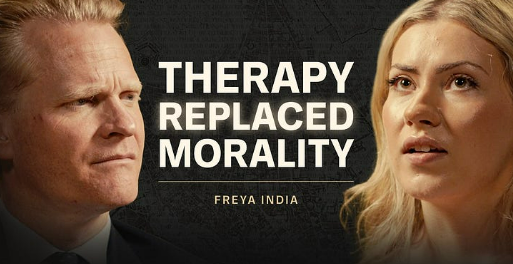
I recently watched a podcast where James Orr discussed with Freya India the idea that therapy, and therapy culture, replaced morality. While I believe the current, overall culture of therapy is the location of toxicity in human behavior, which leads me to agree with their take, true therapy or counseling should operate from sound, objective realities, objective truths, and objective morality. The therapeutic endeavor itself isn’t the problem, it’s the improper application of it. When therapy abandons objective anchors, it stops being therapeutic and becomes permissive. It doesn’t heal, it pathologizes. Having said that, the conversation struck a nerve in the realm of moral relativism.
Moral relativism didn’t arrive like a catastrophe, it showed up like a shrug. Do whatever works for you. It’s your truth (which doesn’t exist). We’ve torn down shared moral boundaries and replaced them with personal preference, as if a society can survive on nothing but individual feelings. The psychological fallout is obvious. Confusion, anxiety, lack of direction, and a culture that can no longer tolerate discomfort without calling it trauma. It is the literal breeding ground for the epidemic of apathy we see in Gen Z.
Freya India said it bluntly,
“When everyone makes up their own morality, we end up in separate worlds.”
That’s exactly what this moment feels like. The inability to grip agreed upon values. How did we get there? By wanting the outcomes of moral discipline without the discipline itself. We want the fruits of sacrifice without the sacrifice. We want maturity without constraint. We bought the idea that anything which constrains destroys. The result is a generation that celebrates its authenticity but collapses under the slightest internal pressure.
This is what moral relativism produces. When everyone defines right and wrong according to personal preference, emotional comfort replaces morality. The fear of hurting someone’s feelings now outweighs the obligation to speak truth. People stay silent, not because they’ve thought deeply, but because they’re terrified of being called judgmental. Once emotional safety becomes the highest value, every other value gets downgraded. Responsibility looks oppressive. Boundaries look abusive. Expectations look cruel. Freya said,
“We have forgotten the word morals and replaced it with boundaries.”
Limitations as Liberation
Jordan Peterson, for years, has been saying that we’re being taught that all boundaries are tyranny. But a world with no boundaries isn’t free, it’s chaotic. Everyone understands this at the fundamental level. A child without boundaries becomes anxious. A marriage without boundaries falls apart. A society without boundaries dissolves into factions. And yet, somehow, we’ve convinced ourselves that moral boundaries are uniquely dangerous, while pretending the psychological fallout doesn’t exist.
Jonathan Haidt’s research shows how this plays out. When “safetyism”, or harm avoidance, becomes the highest moral priority, the definition of harm expands until anything can count. Expectations hurt. Standards hurt. Disagreement hurts. This inflated sense of fragility is exactly what we see now. We have a population that is both hyper-sensitive and chronically distressed. A terrible psychological combination. People can’t tolerate discomfort, and they can’t find stability. They’re told to look to the self for their moral compass, but the self is what got them here.
The symptoms are real. The rise in anxiety, the inability to commit, the paralysis around decision making, the hostility toward accountability. When nothing is objectively right or wrong, people don’t become liberated, they become overwhelmed. Every choice becomes existential because there’s no stable framework to lean on.
Freya went on to acknowledge something powerful. Society loves celebrating the milestone of marriage. 25 years. 50 years. But hates acknowledging what built it. Sacrifice, grit, restraint, discipline. Those things require boundaries, and boundaries are incompatible with relativism. If my values and your values are all that exist, then no one is allowed to say that any set of behaviors is necessary for a stable relationship. So we glorify the outcome and denounce the process. It’s delusional and dishonest.
Here’s the harsh truth. Boundaries don’t suffocate us, they stabilize us. They give us a structure to push against so we can grow. They keep our impulses in check so we don’t destroy ourselves. They give meaning to our commitments, weight to our promises, and direction to our choices. Remove them, and you don’t get freedom, you get fog.
The Results
And fog is exactly what we’re living in. A society that treats morality as personal preference will inevitably wonder why they feel so detached. Why kids are anxious. Why adults feel lost. Why relationships crumble. Why communities can’t agree on anything. Why we’re constantly offended yet never fulfilled.
We don’t have a cultural crisis of compassion, we have a crisis of clarity. People are starving for direction while being told that direction itself is oppressive. They’re collapsing under the weight of freedom because freedom without structure is psychologically unbearable. It’s too much choice without any grounding.
Our Next Move
We need to stop pretending that moral relativism is harmless. It’s not. It’s a psychological toxin. It produces confused individuals and fragmented communities. It destroys resilience. It undermines accountability. It dissolves meaning. It rewards fragility and punishes strength.
We need to reclaim objective standards. Not because we want control, but because humans cannot function without them. Children need boundaries. Adults need responsibility. Communities need shared expectations. Society needs a common moral starting point, or it will tear itself apart.
This doesn’t mean returning to some rigid, nostalgic fantasy. It means recognizing the psychological truth that people thrive under clear structure and crumble under limitless freedom. Our greatest liberties are found inside boundaries, not outside them.
We can keep pretending relativism works, or we can face reality. One path leads to stability, resilience, and meaning. The other leads exactly where we are now. Resentful, anxious, and foggy.
It’s time to choose.
Stay Classy GP!
Grainger