Why Therapy is So Hard For Men

The Attempt at Growth in an Unwelcomed Room

Men walking into therapy often feel like they’ve stepped into a room designed for someone else. The reasons are so vast, but here, I’ll address nine of them: Face to face communication, vulnerability is mocked, the zero-sum game, imbalanced topics, the feminine standard, socially constructed lies, therapy lacks humor, pathologizing biology, and men feel like no one cares. I invite you to read this with an open mind. Again, this is not exhaustive, just representative.


Face to Face vs. Side by Side

Men tend to communicate best side by side, not face to face.

That simple difference matters more than most people realize. Face-to-face communication, in male psychology, carries two common meanings: confrontation or vulnerability. Across most of male social life, communication happens while doing something. Driving, fishing, fixing a truck, lifting weights, or watching a game. The conversation happens alongside the activity, not in direct emotional spotlight.

  • Put two men shoulder to shoulder and they’ll talk for hours.
  • Put them in two chairs staring directly at each other in a quiet office and the everything changes. It can feel interrogative or emotionally exposed in a way that men aren’t accustomed to.

Side-by-side communication lowers the pressure. It creates breathing room. The activity gives the conversation a rhythm. In many cases, men open up more easily when the focus isn’t entirely on them.

Vulnerability is Mocked

Another barrier appears when a man finally does attempt vulnerability.

Often this moment happens awkwardly and without practice. A man who has spent decades learning to contain his emotions suddenly tries to express them. Then it comes out unclear or the timing is confusing to the spouse.

Then comes the worst possible response.

The spouse, not expecting this new approach, reacts with confusion or even mockery. Not necessarily malicious mockery. Often it’s disbelief. Then comes a comment like, “What are you doing? You’re fine. Just grill the steaks!”

To the man, that moment carries enormous psychological weight. He took a risk. The risk was rejected. The brain quickly learns a lesson… vulnerability leads to humiliation.

The defense mechanism that follows is predictable. He shuts down. Not because he refuses growth, but because the interaction signaled danger.

Zero-Sum Game

Discussions about men’s mental health often trigger an odd cultural reflex.

Some people hear “men’s mental health” and interpret it as an attempt to take attention away from women’s issues. The conversation becomes competitive, as if compassion and understanding are limited resources.

But mental health is not a zero-sum game.

Helping men does not harm women. Helping women does not harm men. Human suffering doesn’t require a ranking system. It simply requires attention and care.

Men’s health advocates don’t want the spotlight shifted from women to men, but rather just broadened to cover both. We can think two things at the same time.

Imbalanced Topics

Many therapists sit down with men and immediately ask about their feelings.

That sounds reasonable. Therapy, after all, deals with emotions. But the timing matters. Sometimes a man walks into therapy and only wants to know why Chris didn’t like his new boat.

On the surface that seems trivial. A therapist may quickly assume there’s a deeper emotional wound underneath. Maybe insecurity. Maybe validation issues.

And sometimes that’s true.

But sometimes the man is just thinking about his boat.

Men often process thoughts through practical details before moving into emotional territory. Jumping immediately into emotional analysis can feel intrusive or premature. It creates a sense that everything must be turned into a psychological excavation.

Write the comment down. Let the conversation breathe. If there is deeper meaning, it will surface naturally over time.

Not every statement needs to become a therapeutic breakthrough the moment it’s spoken.

The Feminine Standard

Traditional couples therapy tends to follow a very specific format.

Two partners sit across from each other. They speak calmly. They take turns describing their feelings. The therapist facilitates reflective listening and emotional validation.

  • For many women, this format feels natural and productive.
  • For many men, it’s exausting and feels like psychological quicksand.

The environment emphasizes emotional articulation, sustained eye contact, and prolonged discussion of feelings. These communication styles generally suit women more often than men.

Many men would rather resolve conflict in a more active setting. Talking loudly over music while shooting pool. Arguing during a long drive. Venting frustration while tossing darts or putting golf balls across the living room/office.

Conversations often become more honest when they’re embedded in action rather than stifled by stillness.

Socially Constructed Lies

For generations, men have been told a story about themselves.

The story says men must have everything together. Real men don’t need help. Real men solve problems alone.

That story is both deeply embedded in culture and deeply false.

Human beings are social creatures by design. Our brains evolved to cooperate, communicate, and share burdens. Isolation is suffocating.

There is nothing weak about asking another person for perspective. Sometimes a man simply wants help understanding why his wife yells so much or why they have a sexless marriage.

Therapy Lacks Humor

Therapists are just too damn serious.

The atmosphere can feel like a funeral for joy. Every comment is analyzed. Every sentence is treated like a symptom. Laughter gets awkward.

But men often process difficult emotions through humor.

Sarcasm, joking, and playful exaggeration are not avoidance mechanisms by default. Sometimes they are emotional pressure valves.

I have a client who laughs when he expresses dissent, frustration, resentment, and he usually does it through humorous sarcasm. I often join him in laughter. Sometimes that’s enough.

Pathologizing Biology

Often couples therapy is led by a woman who knows nothing about what you just read and works solely on how men can be more like women.

Many therapeutic frameworks were developed around communication patterns more common among women. This creates an unconscious bias.

But men and women are not identical creatures psychologically or biologically.

When therapy treats male tendencies, like directness, emotional restraint, and action-oriented thinking, as defects that must be corrected, men understandably resist. The result is more men rejecting the notion that the only solution to their marital problems is if he learns to cry at Hallmark movies. Men do not need to become women in order to become healthy partners.

They Feel No One Cares

After enough experiences like these, many men arrive at a bleak conclusion.

They believe no one truly cares whether they struggle or not.

If society cared, people would try harder to understand how men communicate. Vulnerability would be welcomed rather than mocked. Mental health would not be framed as a competition. Masculine biology would be studied rather than dismissed.

When men feel fundamentally misunderstood, disengagement becomes the logical response. Why participate in a system that feels designed without you in mind?

The tragedy is that this perception reinforces silence. Silence deepens suffering. And suffering, left alone long enough, begins to convince people they are invisible. And this is how we get to the staggering suicide statistics that exist today.

When therapy learns to meet men where they actually are, the resistance often softens, and the conversation that was once impossible becomes tangible. I’ve seen this firsthand. Men can have flourishing lives and fixing the broken therapeutic system is a good step towards this realization.

Stay Classy GP!

Grainger

According to Research, You and I Are Probably Wrong

Curiosity, Conversation, and the Quiet Collapse of a Divided Society


In Case You Missed Recent Articles


The recent “No Kings” protests garnered less attention than previous rallies. While it seems to be dying out, it still got my attention. I spoke with people who attended them, read write-ups on the protests, and watched various clips covering the day’s events. I was curious as to what exactly they were protesting. The results were baffling.

Some of the main points included:

  • Executive orders
  • Removing illegal aliens
  • Ignoring the constitution

I couldn’t help but think, where were these outcries when Biden was in office? These are some of the same things the other side were upset about when Biden was in office. I thought, why are they mad now, but not back then? And why are conservatives not mad now, but were back then?

Executive Orders

It is fair to say Trump has issued the most EOs in recent history. As of this writing, here are the EO numbers to date:

  • Trump – 220 in his first term and 255 so far
  • Biden issued 150
  • Obama issued 276.

All three president’s numbers warrant a tyranny label. For reference, James Madison issued 1 in eight years. One.

Deportations

Where were the “No Kings” rallies during the Obama administration? As of this writing, here are the deportation numbers by president:

  • Trump: approximately 1 million
  • Biden: approximately 1.5 million
  • Obama: approximately 3 million (Garnering the nickname Deporter-in-Chief)

Where was the deportation outrage among liberals from 2008-2024? There should have either been outrage this entire time, or no outrage now. And where are the conservatives now that were outraged during the terms of Obama and Biden?

When asked which constitutional amendment, provision, clause Trump is ignoring, the only answer I got was “All of them!” They simply could not answer it. They had no defense of their own. The binary approach is what is disingenuous. It’s not that they disagree with tyranny, it’s that their team isn’t in office.

There is a current issue with this on the other side. Conservatives are no better. Why aren’t more conservatives speaking out against the number of EOs? I understand the need for them, but the abuse is rampant and every president uses them like tyrannical building blocks. They have no place in a republic.

For the record, I haven’t seen much in the way of ignoring the U.S. Constitution on the part of Obama or Trump. Biden, however, trampled on it, particularly through Covid.

A Call to Action

So why are we only hearing about the president on the “other side?” (Reminder, you don’t have a side. They don’t care about you. And the sooner you realize this, the better off your mental health will be).

We must find a way to bridge this divide. The reality that we cannot see or understand those on the “other side” is quietly dissolving the moral and social fabric upon which our society depends.

Homophily is common. This is the tendency to interact with those similar to ourselves more often than those considered different. You see this every day. Think about who you’re drawn to.

  • Frequents the same establishments
  • Enjoys the same hobbies
  • Has a similar intellect
  • Similar familial situation
  • Political and religious worldview

What Research Says

Individuals tend to underestimate the extent to which dialogue with those holding opposing views can refine their thinking and enhance their understanding of complex issues. Multiple research studies suggest that individuals may underestimate their level of agreement with a piece of communication from across the political aisle.

  • People expect that listening to opposing views will be unpleasant (Dorison et al., 2019). This was found to be a forecasting error. Their assumption stood directly in their way, subsequently affecting information consumption.
  • They expect that others who do not share their views will respond negatively to them (Wald et al., 2024). They found that people underestimate the degree of common ground that would emerge in conversation and from failing to appreciate the power of social forces in conversation that create social connection.
  • People are afraid they will not feel heard by others during a conversation (Teeny & Petty, 2022). Feeling, in advance, that they will not be heard, they are significantly more reluctant to enter into conversation with anyone with opposing views.
  • Brand new research showed that each participant underestimated levels of depolarization after having a conversation with them about various topics: Dogs vs cats, cancel culture, Biden’s performance as president (Kardas et al., 2026). All had the same outcome. Another finding within this study was that if one was told that it’s been shown that polarization reduces after conversations with others with different viewpoints, their own polarization reduced, without the conversation ever having taken place. Just the idea that someone else may have a different view and that previous experiments showed most depolarized after discussions caused a solid shift in their own polarization. Each participant found unexpected areas of agreement when discussing issues typically viewed as polarized.
  • Todd Kashdan proposed that curiosity itself was a driving factor behind reluctance towards political conversation. His team found that people incorrectly assumed others would be closed-minded towards cross-aisle conversations. Yet when they discovered that their political in-group displayed more humility and open-mindedness than originally anticipated, their curiosity increased, leading to more fruitful and willing conversations across the aisle (Kashdan et al., 2025).

Tribalism Must Go

Moral of the story? You’re probably wrong. And so am I. And that’s ok. Let’s change. Tribalism is a cancer. It does no one any good. It becomes evident that we have misjudged the depth of our own intellectual flexibility, as well as that of others, underestimating our shared capacity to adapt, to remain curious, and to reshape our thinking in response to new evidence. I’ve been as guilty as anyone. I get caught up in, “They’re not going to listen to anything I have to say anyway, I’m not going to waste my time.”

Sometimes this is rooted in a quiet but powerful presumption that we already possess the truth, and that the task of the other is merely to recognize it and follow. In such a posture, curiosity is not only diminished but also displaced, though it may be the most essential element of all.

Such curiosity led me to here. Years ago, I decided to learn. Really learn. And the more I learned, the more I understood the premise behind Socrates’ claim, “I am the wisest among you because I know nothing.” He found that the more he learned, the more he realized how much was out there to learn. And he possessed a small, minute fraction of the information available. For me, this led to openness and curiosity. Which led to anti-tribalism.

As stated in my first book, America’s Great Threat: America, America won’t fall from the outside. It will collapse from within, foremost among the causes is a rigid, binary way of thinking that divides people and discourages curiosity.

End Tribalism!

Stay Classy GP!

Grainger

References

Dorison, C. A., Minson, J. A., & Rogers, T. (2019). Selective exposure partly relies on faulty affective forecasts. Cognition, 188, 98–107. https://doi.org/10.1016/j.cognition.2019.02.010

Kardas, M., Nordgren, L., & Rucker, D. (2026). Unnecessarily divided: Civil conversations reduce attitude polarization more than people expect. Journal of Personality and Social Psychology, 130(2), 187–214. https://doi.org/10.1037/pspa0000469

Kashdan, T. B., McKnight, P. E., Kelso, K., Craig, L., & Gross, M. (2025). Enhancing curiosity with a wise intervention to improve political conversations and relationships. Scientific Reports, 15(1), 40272–11. https://doi.org/10.1038/s41598-025-24021-8

Teeny, J. D., & Petty, R. E. (2022). Attributions of emotion and reduced attitude openness prevent people from engaging others with opposing views. Journal of Experimental Social Psychology, 102, 104373. https://doi.org/10.1016/j.jesp.2022.104373

Wald, K. A., Kardas, M., & Epley, N. (2024). Misplaced divides? Discussing political disagreement with strangers can be unexpectedly positive. Psychol Sci, 35(5), 471–488. https://doi.org/10.1177/09567976241230005

Don’t Throw the Message Out With the Mess-Ups

Logic Dies When Identity Speaks

Kid Rock & Bad Bunny

Do your best to read this with an open mind and an attempt to discover something new.


The Super Bowl halftime show was talked about more than the game. This has been the norm for the last few years. But this year, because of the strong political divide, there were two halftime shows. One for “each side.” This phrase alone is incredibly stupid to say. What’s a side? You have no side. They don’t care about you. And the fact that they’ve duped you into thinking you have a side that resembles any form of allegiance to you is stupefying.

So in come the predictable and tired political slogans and hateful rhetoric aimed at the “other side.”

“All Spanish! Yay diversity!”

“All Spanish?, we speak English!”

“It’s goIng to be sexy and lit!”

“It’s going to be vulgar!”

“Only thing more powerful than hate is love.”

“How many women does he love? His first song suggests too many!”

The next predictability were those praising the other halftime show. It was terrible. Lee Brice was ok. The others were very subpar. Until it got to Dr. Phil’s redneck cousin. Kid Rock was amazing. And I’m not a Kid Rock fan. Overall, it wasn’t a great show. But good luck telling that to MAGA.

“This was the best. Screw Bad Bunny!”

“I ain’t watching no Spanish show. ‘Merca!”

But the not so predictable part was when many turned on against Kid Rock for singing about Jesus.

The angle was that he, at one time, was a womanizer, and maybe even pedophile. There’s no evidence for the latter. But he was definitely the former. And wild. And crazy. And redneck. But like all people, we change. He did too, apparently. This takes me to my main point.

Tribalism Enters Center Stage

In one show, you have a man who is clearly currently a total womanizer who blatantly disrespects women and does an entire show about how every woman wants him and he does what he wants to them and leaves. But his most notable message was “The only thing more powerful than hate is love.”

On the other show, you have a character who has also ruffled some feathers, past and present, who ends up with a message saying “You can give your life to Jesus, till you can’t.”

Both artists controversial. Both have disreputable pasts. Both brought a strong positive message. This causes me to ask two questions?

  1. Why is one better (or worse) than the other?
  2. Why are we dismissing the message because of the messenger?

The only possible answer to the 1st question: Tribalism. And the answer to the 2nd question? See 1st question.

  • Solomon gave us the wisest book of the Bible.
  • King David gave us the most passionate book in the Bible.
  • Moses is the father of Jewish law and a foundational pillar of the Christian faith.
  • One left his first wife, hopped in bed with every chick this side of the Euphrates, decided to have multiple wives, who, eventually, were his downfall.
  • Another had an affair and killed her husband, who was his most loyal soldier, to cover up the affair.
  • Another killed a man because he got pissed off.

Do we throw their message out because of their mess-ups? I hope not. I have a lot of good things to say to help people live their best lives. But if you knew me in high school, you may not listen. Because I was a jack-wagon. Ernest Hemmingway and Robin Williams had plenty of good to say but ultimately couldn’t live by their own words. There have been many people in places of leadership that have positively altered the course of people’s lives, changing them forever, yet found themselves in a career-ending scandal.

There’s a strong psychological pull to dismiss a message once we discover flaws in the person delivering it. When someone lives inconsistently with what they teach, the instinct is to label everything they said as invalid. That reaction is understandable, but it isn’t always objective. Information can still carry value independent of the character of the person who delivered it. Sometimes the messenger is simply the vehicle. While the insight itself remains useful, constructive, or even transformative.

The tribalism has to end. There’s no real progress until we see through each other’s eyes.

I thank God every day there were no smart phones when I was in school. I thank God I’m forgiven. Thank God I’ve been given a second chance.

Don’t throw the message out with the mess-ups.

Stay Classy GP!

Grainger

The Freedom of Limits

Less Echoes, More Challenges


This isn’t one of those articles that brings research, data, science, into the discussion. This one is the eyeball test. What I see, what is working, and what’s not working.

Back Story

When I began officiating college basketball, it was primarily due to how poorly basketball was being officiated. I set out to show it was possible to work hard and be a good referee. I quickly garnered a reputation for, “That’s one of the good ones.” As if to suggest this is rare.

Fast forward. Many years later, I’m serving in a pastoral counseling role at my church when my wife says, “You should consider doing this for a living.” That sparked a desire to understand where the industry was. It didn’t take long to understand that this industry was ideologically captured by group-think minions that dare you to present facts and refuse to test the ideas they espouse proudly.

  • Affirm at all costs
  • Validate anything and everything
  • Make them feel seen and heard so they return
  • Don’t challenge them or they will end their own lives and you will be the reason why

This all made no sense to me. If counseling becomes solely a space for affirmation without thoughtful challenge, its value diminishes. Effective therapy involves both validation and constructive confrontation. Helping clients examine assumptions, recognize blind spots, and consider alternative perspectives rather than simply reinforcing existing beliefs.

But that’s just it, we have moved beyond the ability to think critically, but rather homogenously. It’s an incessant drilling of like-minded, echo-chambered mobs with pitchforks daring others to get in their way. “If they believe they’re a microwave, you better find the popcorn button!” But there’s a problem, it simply doesn’t work.

Therapeutic Madness

I recently read an article that made me almost come out of my chair and yell in excitement at the screen, “Yes! That’s what I’m saying!” Skye Sclera’s primary point was how therapy seems to be ideologically homogenous and in denial that another perspective exists. When therapy becomes this rooted in groupthink, it reduces its quantitative reach. And when clinicians struggle to establish clear behavioral limits, clients may interpret this as implicit permission for unrestricted behavioral choices, including those that may be maladaptive or harmful. It’s like a menu that has way too many options. You’re not impressed, you’re overstimulated. That’s because there’s liberty in limits. But good luck telling the therapeutic community that.

The Outcry

Lately, there have been an influx of mothers entering our office making this statement, “I heard you had a man here that talks to teenage boys and knows how to make the rest of our lives more peaceful. Well, I need this guy to see my son. Because he is wreaking havoc on our home and something has to change!” The last five mothers who entered saying this, I accepted as clients. Here are some examples:

New Dad

One comes in, looking everywhere but in my eyes. Talks at me instead of to me. We begin talking about how he ended up in my office (most of my clients are court-ordered). As he states why, I quickly see that this young man doesn’t have a man in his life telling him how to and how not to act in public. So I ask. Nope. No man. So I lean in. “You want to be exactly like your father who is sitting in a prison cell? No? Then you should start acting like a real man. You have a baby on the way. Do you wish to be the dad you never had? Yeah? Then you will need to start acting like a man. So far, you resemble a little boy who argues and fights his way through everything. Men discuss. Men care. Men protect and provide but also nurture and love. You are on your way to being cellmates with your dad if you don’t do something different!” He clearly needed to hear this. Because his mom told him he didn’t have to go to therapy if he didn’t want to. Yet he chose to continue.

Little Boy Syndrome

Another one came in looking down and away, steady RBF. Made it clear he didn’t want any part of this. Again, I leaned in. “Sounds like you wanted to be treated like a man.” He nods yes. “Then you should start acting like one. Men don’t look down when they’re talking to people. Men don’t cuss their mothers. Men don’t sit back and wait for good things to happen. They make good things happen. They initiate. They help. They make everyone’s life around them better because they’re in it. Little boys cause more problems. And you’re causing more problems for your family.”

This particular young man goes back to court. His mother tells the judge about our conversations. Leaves it to the young man where to go for therapy. He says he wants to see me because I’m “different.”

What makes me different? I fully believe it’s because I don’t let them stay where they are.

“Who you are isn’t nearly as important as who you could be. And who you could be isn’t here. So let’s go find him.”

Mom’s Despair

A mother comes in with her arms open. “The last 5 therapists I saw didn’t understand. They validate my son’s anger outbursts. Affirm his rudeness and violent tirades. They say that we must let him feel his emotions fully. Am I going crazy or does that sound like a bad idea?” I then spoke about how young men need structure that’s not sugar-coated but blunt and forward directed. I told her that I believed his previous therapists were trying to exorcise the masculine out of him, assuming that was the demon within, and installing a feminine chip would solve everything. But it won’t.

As I told her some of the strategies I use on teenage boys, she began to cry. But they were tears of joy. For the first time, she encountered feedback that resonated with psychological clarity. Rather than vague reassurance, she heard a formulation grounded in behavioral principles. I spoke of the benefits of structured incentives, consistent boundaries, and predictable consequences. At the same time, supporting his development likely requires a balanced approach. Allowing meaningful autonomy while maintaining appropriate parental guidance rather than granting full control. No one had ever expressed the need for him to be called up, not out.

Quenching the Thirst Using Limits

What I hear is an outcry from both mothers and young men for something real and not ideological. Something that beckons to evolutionary psychology. Something that is a calling card to their given biology. That it’s ok to be masculine. It’s ok to be tough. It’s ok to be angry. It’s ok to be confused. And it’s ok to express emotion.

It’s as if they have been wandering in a desert and someone just gave them a drink of cold water.

This must be how Jordan Peterson felt when he realized how many men were responding to his call to stand up straight, put on your best clothes, look a man in the eye, make your bed, and treat yourself like someone you’re responsible for. I’ve seen many interviews when people ask him to acknowledge this influence and he is reduced to tears. Now I know why. It’s sadness knowing that all they needed was fundamental encouragement to revolutionize their lives mixed with the pure joy of seeing it come to fruition.

I’m seeing it now. Every day. We don’t need more therapists who just nod and validate everything. We need more who actually challenge people. Therapists willing to call out what’s broken and call people up to something better. Ones who aren’t afraid to say the uncomfortable, unpopular truths that actually change lives. Because drowning clients in feelings while ignoring reality isn’t compassion, it’s avoidance. And whether the field admits it or not, a lot of people are starving for someone who will finally be honest with them. But if you ask a therapist, they’ll say these clients are misguided and haven’t found their “true self.” Yes they have. And now I’m normalizing their true self with structure and boundaries. And the evidence is right before me. There’s freedom in limits.

Stay Classy GP!

Grainger

Single Awareness Day

Why Being You and Working On You Are Both Good


This is for my single friends.

When I was single I celebrated the hatred of Valentine’s Day. Literally got with other miserable young men and drank to the hatred of Valentine’s Day. I’m still not excited about the marketing pressure to make purchases you shouldn’t in order to meet cultural norms. It’s worse in dating than marriage. But still awful.

Here are some things I wish I knew when I was younger.

Why Do You Get Married?

If you marry because you love them, you’ll divorce them because you don’t love them. Love cannot and will not be a sustaining factor in marriage. It must be commitment. Commitment when it’s hard, messy, gross, frustrating, and truly no fun.

The work gets you through the tough times and makes the good times better than they have ever been.

Note: For Christians, you must marry someone solely because you believe God put this person in your path on purpose. What God put together let no man separate.

Marital Problems

Martial problems are rarely marital problems. They’re almost always singleness problems that never got dealt with.

Deal with you. Make you better. A partner won’t transform you. They will just exacerbate what’s already there. So put yourself in the strongest position possible before expecting success. Your relationship will never be successful if either of you are still broken.

Single Is a Whole Number

You aren’t a fraction of a person when you’re single. You aren’t second rate. Inferior. Missing out on life. You’re single. Some choose to stay single their whole lives. Some don’t. But if you’re someone who wishes you weren’t single, it’s ok. You won’t be forever. Just for now. If you rush, it will be a mistake.

What You Emit, You Attract

I had a daughter that at age 13 was posting sports bra pictures on Instagram. I sat her down and asked her what type of guy will like that post. She thought about it, and with honesty, said, “Boys that only care about one thing.” Yup.

“What kind of boy would respond to a post where you have a cute outfit on holding a cup of coffee and a Bible?” She said, “The marrying kind.” Yup.

The presentation you deliver into the world will equal the response you receive. If you give thot vibes, you will get thots in your DMs. If you give classy vibes, you’ll get classy in your DMs. Work on your presentation. And be the person you want.

Familiarity

There was a study done at Yale involving 3-month-old to 7-month-old babies. The experiment involved three phases: Good vs bad, same vs different, the first two combined.

Infant Morality

In the experiment, they performed a puppet show for the babies. A gray bunny was trying to open a box but was struggling. Along came an orange bunny and helped him finish opening the box. Next, while the gray bunny was trying to open the box, a blue bunny came along and abruptly shut the box door so the gray bunny couldn’t open it. They then presented the two bunnies for the infant to choose. Over 70% of the time they chose the good bunny.

Taste Buds Rule

Next, they presented two types of food. Cheerios and Golden Grahams. The baby selected. Then the green bunny chose the same food they chose, while the purple bunny chose the other food and saying they didn’t like the food the baby chose. Again, they were tasked to choose a bunny. Over 70% chose the bunny who chose the same food.

A Fork in the Road

Lastly, they took the green and purple bunny and placed them in the first scenario. The green bunny who chose the same food as the baby was the bad bunny (no, not the Super Bowl guy) who slammed the box down. The purple bunny who chose a different food was the good bunny. They were at a crossroads. Do they choose the good bunny who chose a different food or the bad bunny who chose the same food? The majority chose the bad bunny who chose the same food. Familiarity took priority over morality.

Be intentional in choosing the right person, not the familiar person. This explains why people choose abusive partners. I had a client in my office last week. First session. She tells me her ex-husband was abusive and she just broke up with an abusive man. I asked her how often her dad abused her. She just started sobbing. She had yet to mention her dad. She didn’t have to. She found what was familiar.

It’s why people go back to spouses that abuse them. It’s familiar. And I get why. New is scary. It’s unchartered territory. It’s unknown. It’s just much easier to go back to what we already know, even if what we know is not good for us. This is why we must surround ourselves with the right people who will support us in this transition out of what’s familiar and into what’s best.

DO NOT settle for familiar. In fact, don’t settle at all. You’re worth more. See your value the same way you value others.

Lastly, when you do find a partner, don’t make Valentine’s Day such a big deal. It’s just another way retailers found to market our emotions. I treat my wife like she’s a queen every single day of our lives. Therefore, when Valentine’s Day gets here, it’s just another day.

Stay Classy GP!

Grainger

I Forgive You

The Burden That Affects Only One


I have written about forgiveness before, but in response to an article and a cultural event that took place. You can see that HERE. This time, I want to make it personal. Because it is. Here’s my story. Try your best to respond to the call to action at the end.

I forgive you. Yeah you, the one who told me you would place me under investigation so that I would leave the company because you didn’t want any white people there.

I forgive you. Yeah you, the one who told me I would not get the job though I was most qualified because I was a white male.

I forgive you. Yeah you, the one who told me that the only way I’d ever be a good therapist was if I were to become a woman.

I forgive you. Yeah you, the one who went behind me, told outright lies, and got me removed from the band because you wanted full credit for any future success of that artist.

Aas far as I know, each one of those individuals above are still alive. But if they were deceased, it wouldn’t change the statement. I forgive them. Why?

Forgiveness is an internal dialogue. Though it is expressed externally. Forgiveness is you drawing a hard line in your own mind and body. This wound does not get unlimited access to my life. The injury happened, but it doesn’t get to run the system anymore. You’re telling your nervous system to stand down, telling your thoughts to stop orbiting the damage, and reclaiming the bandwidth that pain once consumed. From that point forward, you’re not drifting in reaction, you’re moving with intention. Focus replaces fixation. Direction replaces rumination. And your future stops being negotiated by your past.

My Experience

I was working at a large corporation. I had risen to the top 5 in the entire company in sales. I was being celebrated by many in the company that were not in my area. Meanwhile, in my area, there was a black woman that sat me down and told me a harsh truth. I had applied for a supervisor position leading a sales team. She said that she did not want me to get the supervisor’s position.

As a result, I did not get it. She told me it was because she wanted her black female friends to get it because we need more “diversity.” Diversity had come to be known as non-white. She said, and I quote, “The last thing this company needs is more white men telling black people what to do.” Another supervisor’s position became available. I applied again. This time, someone above her stated that being top 5 in the company means something and that he was giving me a shot. But I had to work for “her.” As soon as I got the job, she told me that she would see to it that I’m no longer there.

She had opened an investigation into another supervisor, a mixed male. Again stating that we need more females in the company. Shortly thereafter, she opened one on me, completely inventing infractions. My coworker sweat through it and hung on. I did not. I moved on.


I was in another industry. I went to the boss and discussed getting hired for certain positions. He plainly told me that we need more black people and that I would not get the job, “So don’t even bother applying.” I was more qualified and had more experience. It did not matter.


I’ve already written about this, but basically, I was in class and told that in order to be a good therapist, you have to be a woman. If you’re a man, you have to be feminine. You can’t be masculine in any way. But being a straight white Christian male made it impossible to be a good therapist and that I needed to rethink my career choices.


Each of these individuals left a mark on me. It stung. Each of these individuals was in a place of authority and, by default, I looked up to them. Each said what they said because they knew there were no repercussions. Being racist or sexists was perfectly acceptable as long as it was against white males. And I’m not the lawsuit type. I like the path of least resistance.

Fortunately, I’m surrounded by wise men and women. And these wise individuals encouraged me to see it for what it was; a power grab rooted in ideological homogeny centered around group think that has placed blinders over their eyes to the possibility that someone could disagree with them and be right. So I forgave them.

How Do You Know When You’ve Forgiven Them?

You know forgiveness has actually happened when their name stops having power over your nervous system. It comes up, a familiar scenario resurfaces, and there’s no spike. No heat. No internal recoil. Just neutrality.

My wife had to forgive her ex-husband and her father for years of harm. Today, when they’re mentioned, she doesn’t relive the story. She simply says she hopes and prays they’ve changed. That’s the difference. Forgiveness isn’t sentimental, it’s neurological. The person who once hijacked your emotions no longer lives rent free in your head. Their name becomes just a sound, not a trigger. And in that moment, you realize something radical. You’re no longer reacting. You’re choosing

Studies

There are studies showing a link between forgiveness and physical health. One such meta-analysis (Lee & Enright, 2019) showed forgiveness having a positive effect on the sympathetic nervous system, endocrine production, brain activity, blood pressure, cholesterol, and the immune system (N = 58,531, r = 0.14, p < 0.001).

Your Turn

Who do you need to forgive? Your story is likely much worse than mine. Murder. Rape. Molestation. Sex trafficking. Domestic violence. Psychological abuse. Malevolently turning the children against you. The list goes on and on. People do awful things at times.

You may be asking, “Why should I forgive them? They don’t deserve that.” And you would be right. They don’t. I don’t deserve the forgiveness I receive either. And neither do you. That’s why.

So I’ll ask again, who do you need to forgive? Don’t wait. Don’t put it off. Forgive them today, tonight. Even if you don’t have a way to tell them. Forgive them. Tell someone that you’ve done so. You will begin to feel a weight lifted off of your shoulders. Peace is achievable. But not with unforgiveness lurking in the background.

To my Christian brothers and sisters. Forgiving is not an option. It is a command. We are able to forgive others because God forgave us. Remember, we didn’t deserve the forgiveness God extended, no one does. So forgive.

One last time, Who Do You Need to Forgive?

Stay Classy GP!

Grainger

References

Lee, Y., & Enright, R. D. (2019). A meta-analysis of the association between forgiveness of others and physical health. Psychology & Health, 34(5), 626–643. https://doi.org/10.1080/08870446.2018.1554185

Information Correctly Examined

The Hidden Truth Behind Emotional Headlines


I realize it is uncharacteristic for me to jump into the legal realm, but my criminal justice minor comes out of hiding in certain situations, particularly if the law is being ignored or misrepresented. Knowing the facts behind any situation, juxtaposing those facts against the emission of information, and seeing clear and obvious incongruencies will cause me to write something like this. As a result, we will pause the 3-part series on men valuing marriage and interrupt the regularly schedule program for an important update.

We can all agree that the current crisis of illegal immigration, enforcement of such, and the violent protests that are taking place have captured America, at least in the short-term. We can also agree that loss of life is terrible, regardless of the circumstances. These were human beings coming to the rescue of other human beings (at least in their eyes, this was their intention). These are pure motives. Respectable. Honorable (sort of). But as Thomas Sowell once said, the only thing that made him realize Marxism was the wrong way to go was… Facts. And this is precisely where this story takes a turn, the facts.

Legal facts

Is the current operation lawful under the U.S. Constitution?

  • In Article I, it states that Congress is to establish a uniform rule of naturalization. From this, SCOTUS has inferred national sovereignty over borders.
  • In Article II, the executive branch is given authority to enforce such laws using entities available to it, such as ICE and DHS.
  • Because the courts have determined that immigration enforcement is a civil function and not criminal, immigration laws do not fall under Article III.

When did SCOTUS decide that?

It is vital that the public understand the clear distinction the courts have made between civil enforcement and criminal enforcement. If it were criminal enforcement, then Article III would come into play, granting rights to counsel, speedy trial, jury trial, etc. This is not needed for civil enforcement. Therefore:

  • ICE does not need to provide criminal-level due process.
  • Immigration courts are administrative courts, not Article III courts.
  • Standards of proof are lower.
  • Detention can occur pending proceedings.

The Recent Cases

Now that we have legal facts, let’s break down the facts from this lens for just a couple of recent cases (The Renee Good case is HERE).

Adrian Alexander Conejo Arias

This gentleman was being pursued by ICE for being in the U.S. illegally. Arias also had warrants for multiple criminal offenses. Upon realizing that he was being pursued, Arias fled his vehicle, leaving his son alone in the vehicle. The officers then helped the small child stay warm, provided him food, and sought to reunite him with family. Upon taking the child to a family residence, they refused to open the door and take this child in. Therefore, he has now been rejected by both his father and other family members. ICE then detains Arias, who then agrees to reunite with the child. They are placed in a residential facility together awaiting immigration trial.

When reading the facts, I don’t see detainment of a child, bait, deception on the part of ICE. I see a lawful federal operation.

Alex Pretti

This gentleman attended a protest with a camera and a pistol on his side. ICE agents were there to arrest a different individual. So far, Pretti had been peacefully protesting with a camera in hand. Upon attempting to arrest the targeted individual, Mr. Pretti ceased being peaceful and physically interfered with the arrest. This resulted in an attempt to detain Mr. Pretti for his actions, to which he physically resisted. While agents were attempting to detain him, another agent removed Pretti’s pistol and walked away. Immediately following this, Pretti reaches for his pistol, that he thought was still there, to avoid detainment using lethal force. Neither Pretti nor the agents knew that the pistol had been removed, based on both subsequent actions. ICE agents, believing there to be a pistol, fired shots.

Again, this is a simple case of someone violently interfering with a lawful federal operation, resisting arrest, and attempting to fire shots at an ICE agent. This is sad. Unfortunate. Needless. Preventable. Some say the administration should give ICE a break for a while and let the fury die down. And maybe they’re right. But when they attempt to do their job again, will someone physically attempt to interfere? Will someone hurt the ICE agents who are doing their job? Will someone else lose a loved one? How does culpability rest with those doing their lawful job in the face of unlawful mobs?

All loss is sad. Good’s loss is sad. Pretti’s loss is sad. And you may read this thinking, “This is so wrong!” And maybe you’re right. The solution to these tragedies is quite simple.

Solutions

Exercise your First Amendment right to peacefully protest. Peacefully means:

  • Do not block the road with your body or a vehicle.
  • Do not use your vehicle as a weapon.
  • Do not become physically involved with an ICE agent doing his/her job.
  • If you legally possess a weapon, do not reach for it at any time while being detained.
  • Protest with your right to vote

Hold your local leadership accountable for exacerbating anger by not allowing local authorities to assist ICE while fueling anger and division. Local leadership holds at least as much culpability for these tragedies as the individuals themselves for exercising poor judgment.

I am in full support of your right to detest the current administration.

I am in full support of your right to hate what ICE is doing.

I am in full support of your right to peacefully protest.

I cannot support physical interference with lawful federal operations. Either we have laws with consequences, or we have no laws.

So, do you still feel the same now as you did when answering the poll question?

Now, can we get back to talking about how much I love my wife?!

Stay Classy GP!

Grainger

The Lies of Unconstraint

When Feelings Replace Law, Tragedy Follows

Renee Good


Before we get into this, anyone who knows me knows that I do not take loss of life casually. I do not like it, nor do I celebrate it. This is a tragic situation any way you look at it. I truly have sympathy for someone going through what Good’s wife is going through, as well as the witnesses to such a traumatic event. Prayers are up.

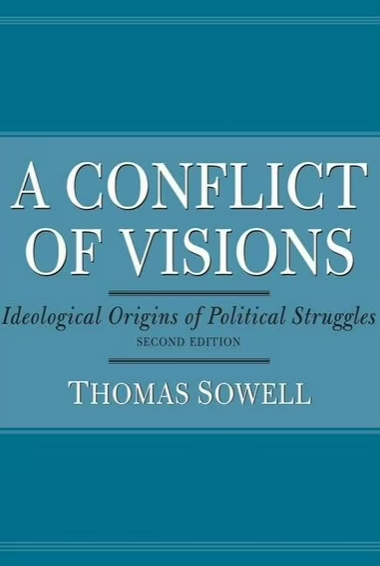
Having said that, this case is difficult, but somewhat predictable. It involves what Thomas Sowell calls the Conflict of Visions. In this book, Sowell refers to two primary ways of looking at the world. Unconstrained and constrained visions.

Unconstrained Vision:

In the unconstrained vision, people are viewed as capable of perfection. Institutions make people evil. People should collectively gather to make each other perfect. When perfection isn’t achieved, it’s because there is a systemic evil preventing this perfection from being achieved rather than fixed human limit.

Constrained Vision:

The constrained vision says that people are imperfect. Perfection will never be achieved. Individuals must work to be the best version of themselves, thus leading to a better society. We must acknowledge and accept that we will never be perfect and must embrace liberty inside of boundaries. Because people are self-interested and imperfect, no system can eliminate trade-offs or achieve ideal outcomes. Social stability depends on traditions, rules, incentives, and limits that restrain human behavior rather than transform it. Progress comes through managing imperfection, not overcoming it.

This case puts these visions on display. There are three topics I’d like to cover here:

  1. Assumption of superiority
  2. The inability to draw a line
  3. The humanity of both the officer and driver of the car.

Assumption of Superiority

Another great book by Thomas Sowell was, The Vision of the Anointed. The book characterizes the “Anointed” as a class of elite intellectuals who, having generously conferred upon themselves superior moral insight, conclude that they are better qualified to make decisions for individuals than those individuals are to make for themselves. These superior beings have decided that if they say it, then it must be true. And if you disagree, then you must be braindead, heartless, or outright evil. As a result, if they claim a moral high ground on any given issue, you must get out of the way because they know what you don’t. Why? Because they said so.

Wokal’s piece on leftist prerogative covers this and is spot on. These elites yell “I’m a doctor” and we are all to relinquish all rules, laws, and civil engagement. We just allow the tyranny of the fringe to step in as the arbiter of all things right. There’s no discourse required, no facts, no data, just “I’m in charge, move!” The end.

Where is the Line?

Another problem is drawing the line. The problem is when you ask to draw a line, you won’t get one on the far left. It’s a result of the unconstrained vision. There are no boundaries.

For instance, it was “Let people love who they want. Love is love.” This, in some countries, has become, “Minor attracted persons have desires and children are capable of the full range of love we have to offer. Love is love.”

Where is the line? Where do we say enough? At what point is it too far?

When I ask those on the right, they are rather quick to draw that line. Sometimes too quick. But on the left, I rarely get a straight answer.

So is violating the law willingly too far? Some claim Martin Luther King Jr. violated the law. He did so peacefully. Never by striking a law enforcement official with a vehicle.

But Jesus violated the law?” Only Jewish law, that he fulfilled. Not the law of the land, which was Roman law. So no, he didn’t violate the law (In fact, part of the point of the crucifixion being so critical was that it was an illegal execution).

I’m still looking for the line. The line that says, though it’s sad that someone lost their life in an altercation, the primary culpability has to reside with the person initiating a violent altercation.

The line has to be that using a vehicle to both stop and strike someone has to be… TOO FAR.

The Humanity

Another aspect of this is the life that was lost. There’s so much sadness surrounding this. She was told it is perfectly ok, good, acceptable, and even noble, to protest a group of children that don’t exist. She was told that telling anyone to leave our country for any reason is bad. Again, it’s the feeling one has about a single life superseding the betterment of society as a whole, that has agreed to a set of laws that we are all to live by.

Let’s talk about humanity. Let’s talk about the 33 stitches the same ICE agent received after being dragged by a car recently. This event causes PTSD. Maybe, he was quick to act based on that. You could make the argument that given the possible PTSD he should not have been working in this stressful environment. That’s fair. But if you drive your car towards me and I have my pistol, I will shoot to save my life also.

Facts

Then there are the facts laid out by Daniel Carr:

  • Blocking the road is illegal. In this case, it is also interfering with a federal operation.
  • The officer on the passenger side walks to the driver’s side to detain the driver for such unlawful actions.
  • The driver accelerates and strikes an officer with the front left of her car.
  • The officer, believing his life was at risk, shoots three shots. Much less than typical in a scenario like this (If you want to know why when they fire, they shoot multiple shots, go spend a day with them). These shots are protected and expected both by Minnesota law and federal law.

Preceding Lies

It is sad that there is a life gone. What’s truly sad is that someone has lied to her and told her:

  • It’s justified to stop federal agents from removing illegal Somali non-citizens who are draining financial resources from the government in a fraud scam.
  • She was told that feeling a certain way justifies solving it using violent means without consequences.
  • She was told that public policy must match how she felt at any given time and we all need to just “get out of the doctor’s way.”

Masculinity didn’t cause this.

Patriarchy didn’t cause this.

Misogyny didn’t cause this.

Lies caused this. Refusal to follow the laws that have been drawn and agreed upon by society caused this.

Unfortunately, this situation falls into the predictable “feelings vs. public policy.” Just because it feels right, doesn’t mean it is right. And as I’ve said before, feelings and public policy can both be good and still not match.

I fully support one’s right to protest legally, which means peacefully, according to the First Amendment. MLK did that. Jesus did that. Renee did not. To me, the saddest part of the story (after the death of a human) is that Renee was fed enough lies that she was willing to put her life on the line for children that didn’t exist, leaving her own child motherless in the wake. I will tell the truth, even and especially when it hurts. The alternative is much worse. And the truth is, this could have been avoided by not believing and following every emotional plea one hears.

Stay Classy GP!

Grainger

How Perspective Shapes Determinism Through Compatibilism

The Free Will Debate

L-R, Socrates, Descartes, Daniel Dennett


This is in response to a 3part series written by Dr. Steve Stewart-WilliamsThis post is a bit more philosophical than usual. I’m not smart enough to have real philosophical conversations, but I can converse on the subject of free will and how it applies to our everyday lives. Please know that this is written from the perspective of a Christian. So my angle is often from my belief, both intellectually and experientially, in the Judaic God.


We are in the process of looking for a house to buy. If you have ever done this, you know the next statement. It has been tumultuous to say the least. The ups and downs of buying a home is not for the weak of heart. In the midst of it, my wife takes a deep breath and says, “God already knows what house we will end up getting, He already knows what we desire, and He already knows what He desires for us, which is greater than we could imagine.” This was her way of coping with the stress.

This sparked a thought, just how much of this should we hold on to? Is it true that God already knows? The answer is yes. And here lies the biggest question: If God already knows, does this mean we are determined in our choices? Because if He already knows, this suggests determinism. But if we are determined to act, why wouldn’t we act solely in our own best interest, forsaking all others? Good question. Let’s tackle it.

Determinism vs. Libertarian Free Will

Dr Steve Stewart-Williams (SSW) addressed this issue in a robust 3-part series. First he tackled the issue of determinism, and more specifically, hard determinism vs soft determinism. Hard determinism can be viewed as the reluctance to accept anything as reality and that we are all merely in a sub-reality playing parts in another’s game. I’d like to leave that right where it is. Soft determinism (compatibilism) offers something more closely identifiable in that free will and determinism are compatible. This is in slight conflict with libertarian free will in that libertarian free will strictly rejects determinism and rest solely on the idea that we choose.

Definitions:

  • Determinism: everything we do is already determined.
  • Libertarian Free Will: rejecting determinism. we have the ability to choose.
  • Compatibilism: freedom doesn’t require that our actions are somehow neither caused nor random. It requires only that our actions flow from our conscious desires, intentions, and reasoning processes. On this view, we have free will as long as we’re not unreasonably coerced or constrained by outside forces.

Dr. SSW briefly addressed the idea of mind versus matter and how this argument is not the same as the free will argument. And that’s true. I still think it’s a good place to start. Descartes was an early dualist. But he wasn’t the first.

  • Pythagoras (6th century BCE) already hinted at a distinction between the soul and the body.
  • Plato argued that the soul belongs to the realm of unchanging Forms (truth, justice, beauty) while the body is part of the mutable, deceptive physical world.
  • Aristotle wasn’t so separatist in his view. The soul (psyche) and body (matter) were distinct but not really separate.
  • Descartes built dualism into the scientific framework. Physicalists later formed in rebuttal to his theory of substance dualism.
  • Carl Jung eventually highlighted such dualism in modern psychology. He also introduced the idea of spirituality as a result of his dualistic views. We are more than the matter that can be measured. We are made up of physical matter as well as archetypes and collective unconscious, structures in the psyche, disctinct from brain matter. This gives rise to my perspective on this issue.

Compatibilism

In part 2, he tackles compatibilism head on. Dr SSW writes:

Most compatibilists and most hard determinists agree on all the important facts. They agree that contra-causal free will is impossible; they agree that people frequently act voluntarily and without coercion; and they agree that it’s often useful to hold people responsible for their actions. The only real disagreement is about how to define free will. And that’s not very interesting.

Compatibilism strikes me as the most convincing view. It echoes the repeated disputes among early psychologists who tried to crown a single master key to the mind. Some swore by behaviorism, others by the machinery of the brain. Still others by conditioning or by self-understanding. One camp invoked genetics as destiny. Another pointed to the shaping power of environment. The trouble is that each holds a fragment of the truth. To all, I say, Yes!. The same pattern shows up in debates about free will. Certain moments in our lives are shaped by forces that run deeper than conscious choice. Such as our DNA, the temperamental leanings we inherit, the quiet impulses that orient us long before deliberation begins. In those moments, our decisions feel tethered to determinism.

Yet the outcomes of our choices unfold plainly before us, reminding us that we do in fact deliberate. We act from a conscious center, selecting what seems meaningful or right in the moment as we understand it. This is the footing on which we ground the very idea of holding someone responsible for what they do. Compatibilism makes the most sense to me.

Moralism

In part 3, Dr SSW dives into the moral argument. He writes:

If we don’t have free will, we can’t hold people responsible for their behavior.

If free will is an illusion, why bother being good?

If our behavior is determined, then rewards and punishments might influence people’s future actions. If it’s not – if it’s simply random – then they can’t. So, rather than undermining accountability, determinism seems to be the only hope for accountability.

Upon the treatment of criminals, he quotes Joshua Greene and Jonathan Cohen:

Free will as we ordinarily understand it is an illusion generated by our cognitive architecture. Retributivist notions of criminal responsibility ultimately depend on this illusion, and, if we are lucky, they will give way to consequentialist ones, thus radically transforming our approach to criminal justice. At this time, the law deals firmly but mercifully with individuals whose behavior is obviously the product of forces that are ultimately beyond their control. Someday, the law may treat all convicted criminals this way. That is, humanely.

My response here is, first, it is not obvious that criminal behavior is beyond their control. Secondly, I’m for restorative justice in almost every case. However, there are those that are more of a liability to society than a contributor. At that point, what’s best for the entire society may not be great for that individual. This is another arena where we must separate our feelings from that of good public policy. Feelings and policy are capable of both being good simultaneously and still not match.

Life Application

Lastly, he quoted Rousseau as saying:

I may think that I have rationally demonstrated my will is not free, but I can never succeed in believing or living as if this were so.

This is where the argument takes a severe turn for me. Because the free will argument dabbles into the conversation of objectivity vs subjectivity. If everything is determined, then everything seems to be subjective. And if everything is subjective, we have no gauge towards meaningful interactions.

Here is an excerpt from my new book, What is a Man:

[The reality in this argument has two places of interest. Verbiage and perspective.

Verbiage

In verbiage, we find that many believe that everything is subjective. No two people agree on absolutely everything. Therefore, there cannot be an objective set of values and morals. But the verbiage is off. The term objective morality never says that two people must agree on everything. It merely states that values and morals can exist outside of individual opinion. So, for example, there are no cultures in which you can steal someone’s property and it be widely accepted. It is objectively wrong to harm another human (outside of defense). I once read some philosophy on this subject and saw two good points of view. First, let’s look at slavery. While there are still areas of slavery in the world today, no one will openly state that it is a good thing or a moral thing to be a slave owner. Everyone inherently knows it is wrong.

Therefore, the objective morality around slavery exists. And if it exists anywhere, then it exists. It is the common-sense theory. There are certain common-sense areas where there is objective morality. Another point of view is that when two people disagree over something, it is something subjective. Some say Peyton Manning is the greatest quarterback of all time. Others would argue that he is not. This is a subjective principle. However, Peyton having won two Super Bowls is an objective principle. We can argue over whether he’s the greatest quarterback of all time, but we won’t argue over whether he won Super Bowls. This notion alone brings about the reality of an objective morality. If we can’t steal without causing harm, and we can’t enslave without causing harm, and we won’t argue over this being immoral, then it is based on an objective morality.

Perspective

The other place of interest is perspective. This one is as simple as the first. If you have the perspective that there is no possibility of an objective morality, then there is nothing to stop you from taking what you want and doing what you want without limitations on your behavior. You have no guide, no standard, no measuring stick. Nothing is off limits. This will inevitably produce strife, recklessness, chaos, pain, heartache, and suffering of all sorts. Anyone that’s lived for any amount of adulthood time knows this. Therefore, the perspective must be that there is a standard by which we all live. There must be an objective morality. Or at least there must be the perspective of an objective morality. The only real question for many is where this objective morality would derive from. My favorite psychologist once said, “I live as though there is a God.”

As Christians, we believe this objective morality comes from God and God’s word to us. But again, there is this perspective thing that creeps its head into the church. For instance, Calvinism. Calvinism is deterministic in the belief that God already knows everything, everything has already been determined, and your life is a predicted outcome of circumstances and events that will not change God’s predetermined mind as to who enters the kingdom of heaven. The premise was that one should live hoping to be that soul. There is a case to be made that this is factually true. However, the problem with this line of thinking is obvious. If your perspective is that God has already chosen who enters heaven, then it doesn’t matter how you live. There again, you find yourself having no limitations on your behavior, leading you right back down that hole of despair and brokenness.]

This is where the entire argument lies for me. Our perspective, and its effect on the quality of our lives. Dr. SSW noted a study where they found that when consequence was removed, people were nudged toward selfish, greedy, and unethical behavior. He noted that the study was flawed, but I think the point stands.

This can be viewed from the original sin lens. It’s now in our nature to do harm, wrong, bad. Therefore, if we are nudged in a manner that removes consequence, we dive towards selfish ambition. The tenets of God’s teachings are to deny our nature and take on His nature. This is what leads us to a more peaceful life and helps those around us thrive as well. Without this directive, our nature leads us in a path contradictory to our innate goals.

Conclusion

In the end, the perspective we carry shapes the arc of our lives. The question becomes how to use what we understand to grow into a sounder, steadier version of ourselves over time. When a perspective begins to wound us or those within our reach, it’s a signal that the lens itself needs changing. Perhaps God already knows the full story, but I don’t. Living as though I do only blurs my judgment. Whatever is fixed lies outside my grasp. What I can influence is how I meet the moment before me.

Stay Classy GP!

Grainger

Responsibility: A Solution No Policy Can Write

The Lie of Structural Salvation


In my book, What is a Man, I leaned heavily on men to be the man they were designed to be, fathers, husbands of but one wife. Be the man that works hard for his family, comes home to a faithful wife, and serves her in every way. One who finds out his girlfriend is pregnant, and doesn’t run away, but runs towards. At least part of the solution to the abortion issue, in my estimation, is men sticking around and not leaving their ladies feeling helpless and alone. We could get into all the other reasons, which I won’t, so don’t try. But a large portion of the problem stems from men not being men.

Solutions

Like this issue, the issue of solutions to societal problems has a similar twist. No one disagrees that certain things are worse than they’ve ever been. In some cases, things are better than they’ve ever been, but this can be argued. But on the subject of problems, the Monday-morning quarterbacks are quick to diagnose. With the best of them.

  • Sects of society are greedy.
  • There are too many poor people in America.
  • Inequality is at its worst.
  • Homelessness must be eradicated.

Macro

But we all fall short on solutions. Many, including the great Richard Reeves, look to public policy for solutions. This is where, much like covid, the cure is worse than the disease. Public policy can only be written, voted, and executed by the government. The government regulates behavior under conditions of conflict. When policy becomes our primary solution, we have missed the entire point! What is being framed as a structural deficit is often a developmental one. Covid taught us that, though history taught us that many times over.

The government does not produce meaning, attachment, competence, or character. Actually, the government does not produce anything. It cannot model responsibility or cultivate resilience. Its function is governance, not formation. And psychologically speaking, entities designed to manage conflict trend towards tyranny, not growth. When we outsource solutions to the state, we bypass the family, the community, and the individual psyche, which is where the actual work of human flourishing occurs. Problems of the human condition cannot be legislated into health, they must be developed into it.

Micro

So what is a viable solution? People. Hearts. Discipline. Perseverance. Resilience. Work. Compassion. Self-sacrifice.

Where it really gets off course is bringing Jesus into it. I hear it all the time.

“If you don’t show compassion to the poor, then you’re not following Jesus.”

And on the surface, that’s true.

We love to use the teachings of Jesus to influence public policy. Except he wanted nothing to do with public policy.

“Give to Caesar what’s Caesar’s. Give to God what’s Gods.”

“But wait? He said take care of the poor. He said if someone asks you to go one mile, you go two. He said if someone asks you for your shirt, give them your jacket too. Jesus was interested in sociology.”

Almost. He was interested in people. But from the individual out, not from society in.

Sociologically, problems are viewed as societal, affecting individuals along the way. If the societal issue gets resolved, the individual will be better. The problem with this line of thinking is, what if the institution or system never figures it out? Then we are completely dependent on the system to rectify our shortcomings in life. When we view problems as individual issues, from the inside out, then we are capable of flourishing regardless of systemic fractures.

The apostle Paul wrote this regularly. He consistently wrote about how he could be jailed, but not silenced. They could try to break his spirit, but they would not succeed. Viewing his problem sociologically, he would’ve fallen to extreme despair. Hope remained alive in the idea that he had autonomy, even in chains.

Individual > Government

My contention is that Jesus said the things he said, addressed the things he addressed, to the individual, not the society. He was not instructing the government to feed the poor. He was instructing us to do it. He didn’t tell the government to help those in need, he instructed us as individuals to do so.

Any reliance on a system, institution, or government, is relying on an outside entity to ensure your own personal well-being. It assumes that meaning, safety, and order can be outsourced to an external structure rather than cultivated through agency, virtue, and responsibility. History shows an extended rebuttal to that assumption. Systems do not love, institutions do not sacrifice, and governments do not exist to make individuals whole. They manage, they regulate, they constrain.

When we treat these abstractions as guarantors of our inner stability, we confuse governance with guidance and authority with wisdom. The result is predictable disappointment. Such entities fail us not because they are corrupt in every instance, but because they were never designed to fulfill existential needs.

This is where I lean on the church. If the government is not to be that, then we are. This applies more pressure, but it’s pressure for which we have received mercy and grace. If we fail, the government steps in.

So the ball is in our court. Step up, or watch tyranny take over.

Stay Classy GP!

Grainger