

“Conspiracy theorists are everywhere these days!” “Stop the spread, get the vaccine!” “Care about your neighbor, have a heart, think of someone other than yourself!”
These are all very familiar words of virtue signaling, shaming, condescendingly accusatory from the morally superior. It wasn’t enough that you disagree or that you choose to make a decision for yourself. You must verbally say from the mountain top that you will inject a trial phase of a chemical into your body or you are morally repugnant and will get what you deserve. The attacks came frequently and regularly.
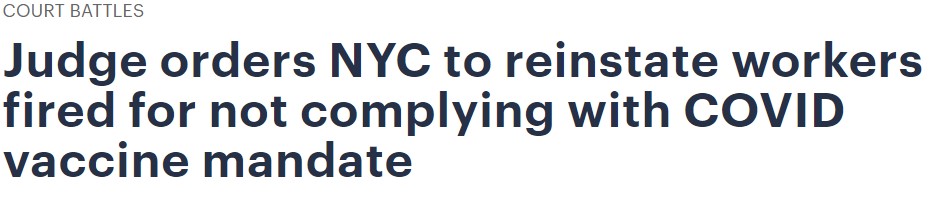
If you were on social media and made the claim that the covid vaccine did not stop you from getting covid, you were immediately written off as a conspiracy theorist. If you made the claim that getting the vaccine did not prevent you from sharing the virus with someone else, you were also written off as a conspiracy theorist. The New York Supreme Court recently ruled that those that lost their jobs due to choosing not to get the vaccine, which was based on the companies’ claim that the vaccine could stop the spread of Covid, were able to return to work with back pay. But yet another thing happened that affected the pocketbooks of others.
If you were someone who made money from social media because of the number of followers you had, and you shared such incendiary rhetoric on your platform channel, you would soon find that, magically, no one was seeing your posts. It’s commonly called “Shadow banning.” You were finding that you were “accidentally suspended” for a day or 2. When returning, you would find that the number of followers to your page had dramatically decreased. This happened to the Babylon Bee. It happened to many conservative commentators. Some would go from somewhere around 100k followers, get temporarily suspended, and return with 12k followers. Their explanation was “oops.” Well, we now may have a decent idea where the “oops” was coming from.
If the documents are real and this story is true (Big “IF”), the federal government has had open access to being able to quickly squash what it deems “disinformation.” Why is that a big deal? Because the government isn’t allowed to do that, per the 1st amendment. However, a private company is not bound by the constitutional limits of free speech, per section 230 of the Communications Decency Act (CDA). So how did the government get away with doing this? Through social media platforms. Ok, but social media companies are private. Yup, this is where it gets dicey.
There is something called a “State action doctrine.” Basically, there are two instances where actions of private parties are deemed acting on behalf of the state, or “state action.” One is when a private entity does something that is normally reserved for government. This part of the state action subject can be seen in the U.S. Supreme court case Manhattan Community Access Corp. v. Halleck. In this case, New York had a regulation that required cable networks with more than 36 channels to have a public access channel. A disgruntled employee of the public access channel MNN was fired and chose to sue on violation of constitutional rights. The Court ruled that running a TV station was not a function exclusive to the government because both public and private companies ran TV stations.
Another side of a case like was in Marsh v. Alabama. In this case, Chickasaw, Alabama was a privately owned company town. Grace Marsh wanted to distribute religious material throughout the town. Marsh was convicted of criminal trespass for doing so. Marsh appealed that her 1st amendment protections were violated. The Court agreed with Marsh. Even though the town was privately owned, it acted in a manner that was normally a function of the government and thus created a conflict between property rights and constitutional rights. Justice Black stated that when those are in conflict, constitutional rights should take priority.
The other instance in which private parties are deemed to be acting on behalf of the state is if there is a close relationship between the actions of the private party and what the government seeks to accomplish. American University Law Review lists this out in detail HERE.
So, one could make a solid claim that section 230 of the CDA is unconstitutional solely based on Carter v. Carter Coal Company in which the Court ruled that government power cannot be delegated to a private company so that the private company can then regulate other private companies, or even its own, which seems to be exactly what happened with the passing of section 230.
However, one doesn’t have to look far to find a case much like what we’re seeing in the “social media v. free speech” debate. In fact, I had to look directly into an organization that I’ve worked with for 15 years. In Brentwood Academy v. TSSAA, the TSSAA, which is recognized as the leading and primary organization for the regulation of school sports, both public and private, penalized Brentwood Academy for putting “undue influence” on football recruits. Brentwood academy sued that these actions by the TSSAA violated their First and Fourteenth amendment rights. The TSSAA held that they were a private company. The Court agreed with Brentwood Academy that because there is such a close relationship between the private company’s function and that which the government seeks to uphold, and because the TSSAA was recognized by the state board of education as the primary organization to regulate sports, that there was no reason to “claim unfairness in applying constitutional standards” to the TSSAA. If these DHS documents are real, there has been, for some time, a VERY close relationship between the government and social media tech giants, namely Facebook and Twitter. Watching this all play out will be interesting. But anytime someone wants to silence someone else’s speech, it’s of the utmost priority to know why, and it’s never “for the good of the people.”
Stay Classy GP!
Grainger