When Protection Becomes Control

A Psychological Look at Unknown Number: The High School Catfish

The High School Catfish

Spoiler Alert! We are about to give away the end of the documentary in the first paragraph. If you don’t want to know the end, save this article, go watch it, then come back.

Netflix’s Unknown Number: The High School Catfish left me unsettled. The case was already disturbing enough. A teenage girl being harassed for over a year through anonymous texts and messages. But the real gut punch came with the reveal: it wasn’t a jealous classmate, or an online predator. It was her own mother.

That’s the kind of twist that makes us stop and ask: what could possibly drive a parent to do this? As a counselor, I naturally look at these stories through the DSM lens. And while no diagnosis from afar can ever be definitive, there are some clear psychological patterns worth unpacking.

A Digital Twist on FDIA

The closest clinical category here is Factitious Disorder Imposed on Another (FDIA). We used to call it Munchausen by proxy. Typically, it shows up when a caregiver fabricates or induces medical illness in someone they’re caring for, often a child, to maintain attention, sympathy, or control.

Kendra Licari didn’t fake medical symptoms, but she created a crisis nonetheless. By bombarding her daughter with anonymous harassment, she generated a problem that only she could later “help” solve. The dynamic is eerily similar: the parent manufactures suffering in order to keep the child dependent. This unmistakably produced severe distress in her daughter. Only this time, it’s Cyber-FDIA.

But FDIA alone doesn’t quite capture the full picture. The content of the messages, sexually explicit, cruel, sometimes telling her daughter to kill herself, suggests something more than just attention-seeking or misguided protection.

The Dark Triad Running the Show

To really understand this case, I think we need to look beyond disorders and into personality traits—specifically the Dark Triad: narcissism, Machiavellianism, and psychopathy (Note that I am aware of the new Dark Tetrad, but sadism did not fit here).

  • Vulnerable Narcissism: This isn’t the loud, arrogant narcissism we often picture. Vulnerable narcissism is fragile and hypersensitive, desperate for affirmation and terrified of abandonment. In Licari’s case, her actions look less like ego inflation and more like a desperate attempt to keep her daughter tethered to her at all costs.
  • Machiavellianism: The manipulation was elaborate and calculated. Hundreds of messages. Fake accounts. Careful concealment. That’s classic Machiavellian strategy: long-term deceit in the service of control.
  • Psychopathy: What stood out most to me was the callousness. Watching her daughter spiral under the weight of harassment, and not stopping, reflects an alarming lack of empathy. Refusing to take full responsibility for her actions was another indicator of psychopathy. Even if she wouldn’t meet criteria for full-blown psychopathy, the trait was alive and active.

With the statement, “Everybody has broken some law in their life. Nobody is perfect”, she made the Dark Triad evident. In this case, the Dark Triad wasn’t just present, it was driving the bus.

Trauma and the Distorted Logic of Protection

Licari later shared that she had been raped as a teenager. She framed her harassment toward her daughter as a twisted form of “protection,” suggesting she created a problem that would keep her daughter close, safe, and coming to her for help. In her mind, maybe she was shielding her daughter from the very dangers she had endured.

But here’s the truth, trauma might explain why her fears were so heightened, but it does not excuse or fully explain her actions. Many people endure sexual trauma, often at the hands of someone close to them. Almost none go on to send their own child sexually explicit messages, attempt to ruin their life, or tell them to kill themselves.

This went deeper than “I got raped.” Trauma may have been the seed, but pathology was the soil it grew in.

The Perfect Storm

At the same time, Licari was losing her job, suppressing her own trauma, and avoiding accountability. That combination created fertile ground for character flaws to take over. Without reflection, accountability, or support, trauma can metastasize. Stress, loss of identity, and secrecy cracked the door open, and the Dark Triad walked right in.

This is the part I can’t stop thinking about. It wasn’t just trauma. It was trauma + personality traits + a lack of accountability and boundaries. That’s when fear of losing a child morphs into controlling them, destroying them, just to keep them “safe.”

Why This Case Is Different

We all know parents who are overprotective. Many of us have seen trauma survivors carry their fears into their parenting. But this case is different. This isn’t the natural endpoint of being “too protective.” It’s something darker.

That’s why the story rattles us so deeply. It takes something familiar. It’s the instinct to protect your child. Yet it twists it into something unrecognizable. The very bond Licari claimed to protect ended up destroyed. Or was it? The daughter’s reaction to the news almost presented “I figured it was her.” Much like the story of Rapunzel, even though the daughter knew, she couldn’t bring herself to accept what her mother had done.

Why It Matters

It would be easy to write this off as one woman’s madness. But I think it raises bigger questions:

  • How do trauma and personality pathology interact?
  • At what point does “protectiveness” become control?
  • And what safeguards, like family, friends, and community, might have stopped this spiral before it escalated?

In an age where technology makes it easier than ever to monitor, manipulate, and entangle those we love, these questions aren’t abstract. They matter for how we parent, how we relate, and how we check ourselves.

A Final Reflection

The irony is crushing. In trying to protect her daughter, Licari destroyed her. The very bond she wanted to preserve now lies in ruins. That’s the tragedy here. Love, once twisted into control, becomes indistinguishable from harm.

The lesson for the rest of us is simple, but not easy. Real protection never requires manipulation. Real closeness never has to be forced.

We must recognize the line between care and control, and have the courage to stop before we cross it.

Stay Classy GP!

Grainger

The Unspoken Truth About Patriarchy and the War on Men

From Father Knows Best to Man Bashing

Recently, I have been seeing more posts about patriarchy than I remember seeing in years past. It appears that in most societal circles, it is a foregone conclusion that patriarchy is evil and any forward-thinking non-neanderthal should already know this. So I looked into it. Why is it evil? Was it always evil? Is there a better option?

Definition

It is important to note the definition I will be using for this article. Patriarchy can be defined this way: A system of society or government in which the father or eldest male is head of the family. There have been branches formed off of this from emotion and protest, but this is the original definition.

So then, what really is a patriarchy? According to the original definition, males lead their families. On the surface, this doesn’t sound so bad. Males are often natural leaders. Their innate ability to assess a crisis intervention with rationality, calmness, and refusal to allow emotion to inform his decision, makes men born leaders. Men have elevated levels of testosterone, which creates more muscle mass and bone density. As a result, men are more aggressive, risk more, are typically taller, faster, and stronger than women. Men go towards danger, rather than seek safety. It has been noted in literature that with sociological and psychological research on gender studies, the axiomatic presupposition is that real gender equality is logically and ontologically impossible.1 The argument made is that patriarchy worked for centuries utilizing the strengths of both genders, rather than an attempt at equality, which cannot become reality. Now before you get into the zero-sum argument, we will deal with that in a minute. And before you get into the “But you’re a man, of course you’d say that!” arguement, women who can see this objectively and set emotions aside are saying the same things this article proposes. You can find such ladies Here and Here.

Benefits

What we know from history on patriarchal societies is that it has been historically successful. We know this because major cultures that dominate much of the global landscape have patriarchal history. Even major religions, Christianity, Judaism, Islam, and Hinduism come from patriarchal cultures. The innerworkings of patriarchy are that it is child centered. It is based on evolutionary biology. Patriarchy is designed to produce children and raise them to contribute to society. Patriarchy is others-focused. It is a social system of survival. Based on matriarchal societies, we know that matriarchy is individual based. You take care of you. I will take care of me. And we can thrive as a society if everyone does their part.

What Went Wrong

Patriarchy is still not sounding too bad so far. But along the way, things changed. Hierarchies in general are flawed systems. Hierarchies often displace those at the lowest level of the hierarchy. This requires the people, not the state, to lift those from the bottom. Historically, when this is done, the patriarchy survives and offers its finest benefits. As with any hierarchy, it has the propensity to devolve into a power-based structure. This is the entire reason for the U.S. Constitution and amendments. The founders understood this propensity and created documents that were designed to keep such power in check. Prior to the abatement into power-based patriarchy, our country was thriving in most areas. When men began abusing their power, limiting social mobility in women, and refusing to acknowledge women’s God-given abilities and contributions to society, exacerbated by the Margaret Sanger(s) and Kate Millet(s) of the world, touting pluralism, anti-monogamy, and the open intent on destroying the family through actions like promiscuity and prostitution, patriarchy began giving society good reason to abhor its existence.

Devaluation and Disadvantages

So where has its destruction taken us? Men are now traditionally devalued and openly discriminated against, without fear of retribution from anyone. James L. Nuzzo puts it this way: “Feminism has led to blatant discrimination against boys and men.”

One study “proved” that there is a bias against women in hiring STEM positions.2 However, this study was done using a sample size of 127. When another group ran the exact same study using a sample size of 1016, they failed to replicate the findings and actually found the exact opposite: People were not biased against women in hiring for STEM, they were biased in favor of hiring women.3

Society spends a great deal of time concerned about the disadvantages girls have in math and science. This is in the face of stats showing us that boys’ disadvantages in reading are a much larger scale. In fact. In the average school, boys are almost an entire grade level behind girls in English.4 The gender gap in college enrollment is now wider than prior to Title IX in 1972, with only 42% of males earning degrees.

The effects of underrepresenting males in attention to health issues throughout society has cataclysmic effects. Among victims of Intimate Partner Homicide (IPH), approximately 75% are female and 25% are male. But try to remember the last time you heard someone suggest we need to address any males being victims of IPH. Yet they make up 1 out of every 4 victims.

We can all recall hearing people say that there isn’t enough funding for women’s health. However, Steve Stewart-Williams reviewed data provided by James Nuzzo that shows that 20% of the country’s health budget is sex-specific. Of that 20%, 15% goes to females and 5% goes to males. Again, tell me the last time you heard someone address a lack of men’s health funding. This is despite the fact that more men die on the jobmen have a shorter life span than women, and men commit suicide more often than women. Male suicide accounts for the same number of deaths per year as breast cancer. Male suicide rates are four times higher than females and has increased 40% in younger men since 2010 (which just randomly coincides with the explosion of smart phones and social media).

Importance of Men

Are men important? If you ask around, look around, you would think not. According to recent polling, both sexes think it’s worse for a husband than a wife to have an affair – the opposite of the traditional double standard. We talk often about more women’s health funding, breast cancer awareness, battered women, hiring biases against women, and rightfully so. But we rarely, if ever, hear ways society can help men who are struggling to the point of taking their own lives. Meanwhile, daughters of single parents without the father involved are 53% more likely to marry as teenagers, 71% more likely to have children as teenagers, and 92% more likely to get divorced.5

One group studied couples separated into two groups. One group, the husband worked full time and the other group, the husband worked part-time or not at all. They found that the couples where the husband worked part-time or not at all were significantly more likely to get divorced.6 However, when the study was turned towards wives, there was no correlation whatsoever in how much the wife worked and likelihoods of divorce. Why the correlation for husbands but not for wives? Men reported becoming depressed from not working and isolated themselves while simultaneously the wives were becoming less attracted to their husband because he wasn’t being productive. Meaning, men need to be productive. But men don’t want to be productive and mocked for it at the same time.

Where To Go From Here

Am I suggesting we should stop focusing on women’s issues and turn the attention to men? Absolutely not. I’ll let Dr. Richard Reeves say it best:

“Gender equality cannot be a zero-sum game. We can do more for boys and men without doing less for women and girls. We can be passionate about women’s rights, and compassionate toward the struggles of boys and men.”

-Dr. Richard Reeves, Of Boys and Men

As Dr. Steve Stewart-Williams pointed out, no one is asking for the spotlight to move from one group to another, we are merely asking that the spotlight shine on a broader population to include both genders.

What if patriarchy was used to serve others, care for others, and resist power dynamics? Would you be opposed to that system? Am I suggesting that patriarchy is the best thing available? No. I am suggesting that it is the least bad system available, and our nation’s history proves it. Only when men abused their power was it a problem. And women stood up to such abuse, rightfully so. This doesn’t diminish the potential that lies within men to lead their families, thus making men better versions of themselves, which helps their family, community, and society thrive. True patriarchy is servant leadership. It is possible. But it will never happen as long as we are in love with a vitriol-filled rage against all things male.

Stay Classy GP!

Grainger

1 Mushfequr Rahman, M. (2021). Why Society Needs Patriarchy: A Scientific and Social Justification. Social Sciences (New York, N.Y. Print), 10(5), 229. https://doi.org/10.11648/j.ss.20211005.14

2 Moss-Racusin, C., Dovidio, J. F., Brescoll, V. L., Graham, M. J., & Handelsman, J. (2012). Science faculty’s subtle gender biases favor male students. Proceedings of the National Academy of Sciences, 109(41), 16474–16479. https://doi.org/10.1073/pnas.1211286109

3 Honeycutt, N., Careem, A., Lewis, N. A., Jr., & Jussim, L. (2020, August 18). Are STEM Faculty Biased Against Female Applicants? A Robust Replication and Extension of Moss-Racusin and Colleagues (2012). https://doi.org/10.31234/osf.io/ezp6d

4 Reardon, S. F., Fahle, E. M., Kalogrides, D., Podolsky, A., & Zárate, R. C. (2019). Gender achievement gaps in U.S. school districts. American Educational Research Journal, 56(6), 2474–2508. https://doi.org/10.3102/0002831219843824

5 Seidel, F. L. P. (2021). The proclivity of juvenile crime in fatherless homes: An urban perspective (Psy.D.). Available from ProQuest Dissertations & Theses Global. (2628794018).

6 Killewald, A. (2016). Money, Work, and Marital Stability: Assessing Change in the Gendered Determinants of Divorce. American Sociological Review, 81(4), 696–719. https://doi.org/10.1177/0003122416655340

The Thanksgiving Feast: No Regrets

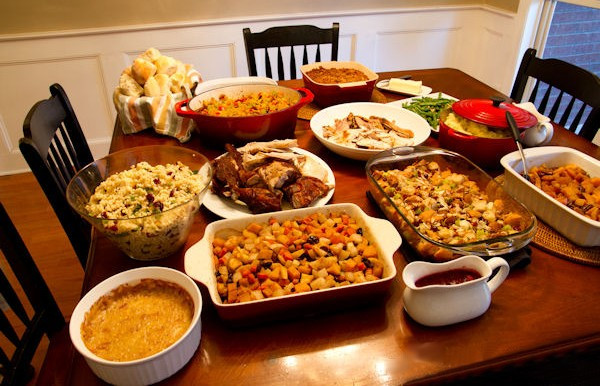
Ah, Thanksgiving! That glorious time of year when you can’t decide to bake or fry your turkey. You have the choice of having your potatoes with little lumps, with peas and onions, or the everlasting standby: tater tots. Your choice of 5 different desserts…oh the dessert! It’s a meal that’s been in the works for days, sometimes even weeks, and it’s finally here. The moment has arrived for you to gather around the table with friends, family, and a serious amount of stuffing. But wait—before you start mentally calculating how many calories are on your plate, take a deep breath and repeat after me: No regrets.

Let’s get real for a second. We all know that Thanksgiving is an indulgent holiday. It’s not about measuring out your portions or calculating macros; it’s about eating for joy, not for judgment. And you know what? You DON’T have to feel guilty about it.

*SN If you are boycotting all pilgrim holidays, this still applies for your grilled cheese or your trip to Ruby Tuesday.

Balance is Key—Not Guilt

Here’s the thing: You won’t get skinny from one salad, and you won’t get fat from one Thanksgiving meal. Balance is the magic word. It’s all about perspective. Let’s say you devour an extra slice of pumpkin pie (guiltyyyy). Sure, in the moment, you might feel a little bit like you’ve just made a questionable life choice. But in the grand scheme of things, that slice of pie is not going to singlehandedly derail your fitness and health goals or send you into an emotional tailspin.

Instead of stressing over every bite, try focusing on the bigger picture: you’re enjoying food that’s been carefully prepared with love and tradition. And if that means going a little overboard on the different potato options, so be it. The meal is temporary, but the memories of laughing with your loved ones over a shared table last a lifetime.

Let’s Talk About That Salad

You know what’s great? Eating healthy most of the time. That’s the true key to balance. But do we need to turn a salad into a shrine of holiness just because it’s the “healthier” choice? Not really. Yes, the salad is a lovely gesture, but it’s not going to cancel out your second helping of gravy-drenched turkey. One salad doesn’t make you a health guru, and one Thanksgiving meal doesn’t make you a turkey-stuffing monster.

Just eat the danged ole salad if you’re craving it, and then go for the stuffing, mashed potatoes, and whatever else your heart desires. Food is meant to be savored, not tortured by guilt.

The Real Secret: Mindful Eating

The real trick to enjoying Thanksgiving (or any indulgent meal, really) is mindfulness. Savor your bites. Pay attention to the flavors and textures. Listen to the crunch of the stuffing and the smoothness of the gravy. Be present in the moment, not thinking about whether you should have skipped the extra roll or if you’re going to have to do 500 burpees to make up for that extra scoop of cranberry sauce.

You know why? Because this holiday only comes around once a year. It’s a chance to celebrate abundance, connection, and joy. Focus on the fun, the family, the laughs, and the fact that the pie you’re about to devour is really freaking delicious. You’ll feel fuller with joy than with regret.

It’s Not a Day of Sin

Let’s get one thing straight: Thanksgiving is not the day you “fall off the wagon.” There’s no wagon to fall off of—there’s only a table, filled with glorious, comforting food. It’s one meal. One day. Not a week, not a month, not a lifestyle choice. So, embrace it.

The next morning, if you’re feeling sluggish, take a walk. Drink some water. But don’t punish yourself for enjoying yourself the day before. You didn’t ruin anything. You didn’t undo all your hard work. You just had a really good meal. And that’s something worth celebrating.

The Bottom Line? Eat, Enjoy, Repeat

So, here’s the bottom line: Thanksgiving is about enjoying the food, not obsessing over it. It’s about balance, mindfulness, and zero guilt. Fill your plate, fill your heart, and most importantly, fill your soul. If you eat something with a sense of enjoyment and no second-guessing, your body will thank you for it.

And if you do find yourself eyeing that last slice of pie and thinking, “Can I? Should I?” The answer is yes, yes you can. And you should—because one indulgent day won’t derail anything. Just enjoy it and move on. Tomorrow’s another day, and it’s full of opportunities to find balance all over again.

Dig in with no regrets. Just gratitude.

Stay Healthy GP!

JD

Objective Truth Hurt My Feelings

Here is a fair question. How is that we have both a massive rise in mental health cases like never seen before and more mental health professionals than ever before? If we have more mental health professionals than ever before, then we should have fewer cases of mental health issues. That’s the logical assumption. But that’s not what’s happening. We have both an increase in mental health cases and more mental health professionals than ever before.

So how did we get here? To answer this question, we must look at the differences in the overall value structure in societies before the mental health crisis explosion and after. Because what we value is what we will espouse, pursue, and emit into the world. Our values point us towards an end goal, whether we realize what that goal is and regardless of whether it is a positive and uplifting goal or a negative and destructive one.

The value and belief system of yesteryear is one of simplicity. Boys and girls grow up in school together, use different bathrooms, understand that their issues are different, and respect and appreciate the inequality of boys and girls. The values and beliefs of the past espouse the notion that where I lack, my neighbor will fill in the gap until I can stand again on my own. The community raises our children. If there was a problem with a teacher, we were instructed that we were the problem (if indeed we were, and we were most of the time). We all play a part and live closely by the golden rule, “Do unto others as you would have them do unto you.” In the midst of this, if someone in our community was out of line, we stepped in to help right the wrong. If it hurt your feelings, so be it. You were better for it afterwards. Men could accomplish things that their wives couldn’t. And likewise, women could accomplish things their husbands couldn’t. And that was ok.

The values have shifted. Now, boys can go into girls’ bathrooms. Girls can join the “boy” scouts. Read that again. Now girls believe they can do anything a boy can do causing boys to react citing they can do anything a girl can do, neither of which is correct. Today’s values say take care of yourself because you can trust no one. Today’s belief system says that you can’t say anything to my children or there will be consequences. If there is a problem with a teacher, it has to be the teacher’s fault. Today’s golden rule is “He who has the gold makes the rules.”

Wives believe they can do absolutely everything their husband can do, allowing for no individualism, cooperation, negotiation, and contribution by both parties. As a result, this goal of “equality” emasculates their husband and leaves him feeling useless and worthless, which contributes to divorce. Men and women simply are not equal and appreciating that and utilizing one’s strengths where their partner is weak, and vice-versa, makes a relationship thrive long term. There is so much science that proves this.

Today we are so afraid of hurting anyone’s feelings that are willing to allow a total falsehood to control the narrative of human existence. We will deny thousands of years of objective science, thousands of years of learning and figuring out which way is the best way, and thousands of years of believing that we are not the highest being in the universe so that one person won’t have their feelings hurt.

How did we get here? We removed objective truth from our society. When I throw a ball in the air, it will come down. If a fetus has XY chromosomes, it will be male. Subjective versus objective can be explained this way: Merle Haggard is a great singer. That is a subjective truth. I believe that but my wife doesn’t. Merle Haggard has won multiple Grammy awards. That is objective. Regardless of how my wife feels about that, it is a verifiable, objective truth.

Some objective truths that we have let slip away include differences in sexes, appreciating the two genders, the family system is the best unit on earth for sustaining a society, the best possible environment for a child to be raised is in a low-conflict home with two biological parents, and the fact that religiosity balances, sustains, and causes any society to flourish. It promotes well-being, community, helping those in need, and unselfishness.

But we are so afraid of hurting someone’s feelings that we ignore these facts and tell outright lies. By “we”, I mostly mean mental health professionals. Although “we” as parents and societal members can also be included. And by outright lies, I mean telling society that a child being raised in a single-mother home is the same as being raised by two parents. My children don’t get to be in this category. I am divorced and remarried. That hurts my feelings. But it is a fact, regardless of how I feel about it. Or that males should be allowed to compete in female’s sports because we don’t want to hurt their feelings of being confused and qualifying for a mental health disorder, according to the DSM-V manual. This is where feelings override solid facts that point you towards healthier living. Healthier living requires that we die to one belief in order to make room for another. That requires that we hear something uncomfortable and are forced to acknowledge it and evaluate it for validity.

Regarding religiosity, when you believe you are the highest order of being in your universe, you are aware of your humanity, aware of the mistakes that you can and have made, and this frightens you. Therefore, you are either frozen in fear and refuse to take risks, or you are completely nihilistic about it and take far too many risks. Neither are good. When you believe in a higher power (God), you understand that you make mistakes but follow the One who doesn’t. You are willing to take risks, but not catastrophic risks. You understand that you have an ultimate goal to reach for, thereby making you better each day than you were the day before. You acknowledge your shortcomings, but chase the perfect One, which only makes you better, which makes your family better, which makes your community better, and so on.

We MUST return to a belief in an objective truth. Facts. Facts that say that discipline reroutes a child to success from where they were otherwise headed. Gentle parenting does not work. Facts that include teaching children that they are not the most important person in the universe and the world isn’t about them. It’s about others. Children are growing up believing they are so important that when they find out that they really aren’t, it is causing a mental health breakdown. These are measurable, scientific facts. There is an argument for and against objective morality. You can read that HERE.

Once we return to facts, even if it hurts someone’s feelings, objective truth, belief in something higher (God), we will begin to see the mental health crisis start to subside. Until then, we still have more mental health cases and more mental health professionals than ever before, which makes no logical sense. Bring logical sense back.

Stay Classy GP!

Grainger

To Family or Not To Family… Part 1- The Church

Remember those pesky brothers and sisters you had growing up? Remember when they did things that got on your nerves? Remember when your parents said something that made you so angry you could bite a nail in half? Now… remember when you got to leave all of that and get new brothers, new sisters, and new parents? Yeah… me neither.

“Dad, I unfriend you!” … “That’s not how this works. That’s not how ANY of this works!”

We all remember the first few things I mentioned. The times when we hated our siblings. When they purposely got on our nerves when we had friends over. When they had to stick their nose in everything you were doing. But we also remember the times when someone else was mean to them. My little brother Adam could tell you stories of how we fought but can also tell you the time a kid older than me punched him in the face. And what happened to said kid’s face (I’m not condoning violence).  I’m just saying that we say we don’t like them, then when they’re under attack we immediately go to their defense. How in the world can this happen?

As much as I’ve studied this topic, I still don’t truly understand it. What I do know is this: God designed it this way. It’s a natural reaction to take care of those close to us, whether we like them or not. It is innate.

Here’s where this conversation gets tough. The church. Oh boy, I said it. Just hear me out. We want to call the church a “family”, but in reality, we don’t really view it as family at all. We view it as a bunch of things, but family isn’t one of them- when really, family should be the primary one.

We view church as a social event. “take a pic for Instagram honey so people see how cool we are!” We view it as a place to GET something. A place to meet people. Nothing wrong with meeting people and getting things needed while at church. But when we really view it as family, church hopping will slow down to a crawl. As of now, it’s a super highway moving at Autobahn speeds. Don’t like what the pastor said about seeking God daily? We just leave. Go somewhere else. Don’t like the guy next to you because he wore a Bama jersey to church? We leave. While these seem like extreme examples, and they may be, they’re really not that far off.

As with any relationship, you don’t really know what kind of relationship you have or how strong it is until you are faced with real adversity. That’s when you get to see where your relationship really is. In a family, when your “dad” says something you don’t like, you learn to deal with it because eventually, you get to a place where you know he loves you and wants the best for you. When your brother gets on your nerves, you just go to a different room of the same house. Oh but church, no… you find a completely different house. You go to the next church with some delusional belief that your jacked up problems somehow won’t find you at the next place. News flash…They do!

Imagine, if you will, a place where you hear the Pastor say something you don’t like and just chew on it and ask God what it is that’s bothering you. Only to find out that it’s something YOU need to change and not the pastor or the church. Imagine a place where you don’t have to be everyone’s best friend but when someone attacks your brother, the one that gets on your nerves, you are quick to defend and can’t really explain why. Imagine a place where things aren’t always perfect and squeaky clean. We’re all kind of weird. We all have issues and problems. But we have these issues together. We walk through them together. We don’t bail out when the Pastor says something we don’t like or agree with. A place where you realize that he’s human. Just like your imperfect dad or mom you had growing up. Imperfect but doing their best.

Now imagine a God, a COVENANT God, getting the opportunity to shower you with rewards, gifts, blessings because you stuck through the hard times to get to the good times. Your obedience to His direction in your life leads to blessings that you can’t measure.

The same goes for the people in the church. Those people that are called hypocrites because they are church goers but also… wait for it… make mistakes. Well that just can’t happen. You go to church. You’re not allowed to make mistakes! It. Is. Family. We all make mistakes. We all say and do things someone else doesn’t like. But at the end of the day, we’re still family.

Church faces is an epidemic that usually doesn’t exist in a real family. We put on these Instagram faces like everything is ok and refuse to let anyone think we don’t have it all together. Afraid of what they may think and afraid of being judged. You get NOWHERE with church faces. The junk is still there. We’re just pretending it’s not. We MUST take those off. We have to be vulnerable. You CANNOT love until you’re vulnerable enough to be hurt. Family doesn’t keep church faces on. Family doesn’t think less of someone going through something tough because they remember going through something tough as well. Family also does so much more.

Family cooks meals for mothers who just gave birth. Or for people who were injured in accidents. Family rallies together to take care of another family member’s yard. Family holds you when your child is in the hospital after overdosing on drugs. Family doesn’t leave your side when you get sick, they run to your side. And it’s important to note that sometimes, you are on the receiving end. But more often, you are on the GIVING end. But if you’re not there, someone missed out on a blessing you had to give. You are needed by your family.

So the next time you and your spouse are pulling out of the church parking lot and they say, “I don’t think I liked church today”, back up, remember you are family and seek God before you just hop on the next family train. Real family doesn’t bail in time of need. Real family sticks it out even when it’s uncomfortable.

Part of family is a “Father” that is leading the family. We dive head first in to that in part 2 of this blog.

Stay Classy GP!

Grainger

The Blended Bunch (part 2)

So we covered the array of emotions and difficulties children go through when attempting to blend a family. But what about the spouses? They’re trying to build a new life together. They’re still figuring out whether they can deal with the fact that he squeezes the toothpaste from the middle of the tube instead of the end. She pulls the toilet paper from the back. He sleeps with the fan on. She likes the TV on when she sleeps. Adults have enough on their plate before we even get in to the conversation of children.

To fully understand the biblical priorities, please refer to an earlier blog I wrote called “Relationship Priorities”. It covers the 5 relationships we have and the order in which they are to be prioritized. In that, you’ll find spouses 2nd and children 3rd. In blended families, they have to be navigated very carefully. There are two different scenarios to think about: before you marry someone with kids and after you have married someone with kids.

BEFORE: I know that in my experience, one of the things that was going to determine whether I could marry Jennifer or not was her kids. If I didn’t like her kids, I wasn’t going to like her. It turns out that she has great kids. They are all smart and have great potential to change this world one heart at a time. They all have big hearts. This is important. If you want someone so bad that you’re willing to put up with kids you can’t stand, you may need to reevaluate your reasons for wanting that person. I can promise you that if it’s for money or any other tangible asset, it’s just not worth the financial gain. You will continue to be miserable on the inside. This wealthy man/woman can’t fix that. Promise.

Another thing I’ve found is that if you aren’t ok with being single, you won’t be ok with being married. Singleness is vital to a healthy marriage. As I’m typing this, my wife is on her way to hang out with girlfriends. An insecure, overly co-dependent man would attempt to forbid this. I’m encouraging it for a few reasons. One, I want the same encouragement when I hang with my guys. Two, it’s the right thing to do. Three, away time is a good thing. You read that right. A GOOD thing.

This conversation was something Jennifer and I understood well before we decided to marry or even date. She loved my daughters. I loved her kids. I haven’t always been crazy about her kids. She hasn’t always been crazy about my girls. But at the core, they’re good kids and we are a family. Albeit a jacked up, crazy, loud, diverse family… we’re still a family. But if I didn’t love her kids and she didn’t love my daughters, we wouldn’t have lasted a year. Maybe not even that long.

AFTER: So there you are, in a new relationship where you love the other person but aren’t really sure about their kid(s)… You’ll want to figure that out before you go another step. First, check your heart. Decide what it is about their kids you don’t like. Then decide if it’s something you can work through and/or get over, even if they don’t change. But if you decide to despise their kids the entire time you’re married, one of two things will happen. Either your marriage will greatly suffer and eventually end from the negative rhetoric or you will find that eventually their children want nothing to do with them. Both are vastly tragic. Your children need you. Their children need them. Now more than ever! Your spouse needs you. In a blended family, the spouse needs proper attention, but the children need more attention. The adults have to be adults and understand that until there is an acceptance of a new normal, they’ll need as much time as they need to reacclimate. There’s no deadline on this. You can’t be impatient (like I was). You can’t push the issue (like I did). You have to be very patient with every child and their unwillingness to adapt. Eventually they will. But regardless, adults have to be adults.

What we can’t do is divide and conquer. Division in a home will always lead to vulnerability, which leads to a welcomed attack from the enemy, which will end the relationship. It just can’t stand divided. In Matthew 12:25, Jesus says this very thing. How important is it that the house is united?

I once heard the story of Bob Mumford taking his seat on an airplane. He soon finds that he is seated next to a high priest in the satanic church. So he strikes up a conversation. During their conversation, the thing that stood out the most was this comment from the high priest in the satanic church, “We have goals, but our number one goal, by far, is to remove the fathers from the homes. If we can do that, the family will destruct and make our mission that much easier.” THAT is how important fathers and family unity are. Even the enemy recognizes it.

So check yourself. Look inward. Because the children need a united front. And blended children need more than that. These children deserve to have love, direction and guidance from a parent and a bonus parent that loves them. If you’ll commit to work at this and not give up, the blessings are immeasurable …And that’s how they became the Blended Bunch!

Stay Classy GP!

Grainger

The Blended Bunch (part 1)

Here’s a story… of a lovely lady… you know the rest. Eight…8! That’s the number of children My wife and I have parented… so far. 5 of hers, 3 of mine. I’m often asked how we manage that. I usually say with lots of alcohol. Ha! No but really, it’s a very tricky situation.

On one hand, Biblical priorities say the spouse is before the children. Children are third (Please refer to an earlier blog titled “Relationship Priorities”). On the other hand, children go through something that they never asked for (divorce) and are thrown into something else they didn’t ask for (a step-parent). And a much larger amount of grace and understanding are required to get through all of this.

Things to expect: children act out. They display their disapproval in different ways, but they all display it. If you think, for a minute, that your children love this new arrangement, you haven’t been paying attention. I’ve heard adults close to me say they still hold out hope their parents will get back together…and they’ve both been remarried for 15+ years. This desire doesn’t go away for some. So what do we do about it?

The only thing we can do is love them. Love them beyond their merit. They don’t deserve the amount of love we have to give them in these moments. But I don’t deserve the amount of love Jesus showed on the cross either. So I’m passing on the same unconditional, unmerited, undeserving love to my children and bonus children (not using “step”).

Things to expect: they’re going to feel like they are in the middle of a tug-of-war. Regardless of how hard you try to avoid it, it’s going to be how they feel. They can’t display love for mom around dad. They can’t display love for dad around mom. Or at least they don’t think they can. I once heard the story of a child that asked his dad, “Is it ok if I hate you while I’m at mom’s and love you while I’m here?” To which the dad said “Sure”. He understood the internal war this child was dealing with… that the child never asked for. It’s up to the adults to act like adults and make sure the children know that they are still very much loved by everyone.

Things to expect: children will play you against both their other parent and your new spouse. They will attempt to divide you and your spouse because they feel the need to make sure they maintain their primary role in your life. They usually do this when they haven’t been shown enough attention. And before you say, “they shouldn’t be attention seeking”, remember, this is a very unique situation that they didn’t ask for. Most children, regardless of what you say, believe their parents are divorced because of something they did wrong. If only they had done something better or not been so bad, their parents would still be together. We obviously know this is very wrong. Another reason why they need much more attention than the average child. That’s also where this whole “blended family” thing gets real dicey.

You have to keep children third, but you have to show them that they are a strong third. You also need to recognize the unique relationships of each individual child. My relationship with Ethan, 18, is very different than that with Colton, 11. With Ethan I’m more of a guidance. With Colton I’m more of a disciplinarian. With both, I suck terribly because I’m a girl dad.

One thing I recall was that early on, Bristol (16), my bonus daughter, was struggling with self-worth. Neither her mom nor her dad did or said anything to cause that… but she felt it the same. She seemed to be unconsciously “wearing” the shame and guilt of the divorce. I gave her extra love. Extra attention. I flooded her with positive speak. I literally picked her up one day and said, “We’re going for a drive.” I proceeded to unleash things like, “You’re smart and beautiful and will accomplish some amazing things one day and I can’t wait to watch it! And if any boy doesn’t see how amazing you are, kick him to the curb quickly!” Eventually, that swagger came back and she was back to the same old super-confident Bristol. Those of you who know her laughed when you read that sentence. This young lady commands a room when she enters. Haha.

Keep in mind that Bristol and Ethan reminded me more than once that “you’re not my dad!” My daughters reminded me that Jennifer wasn’t their mom. And still, Jennifer washed their sheets, washed their clothes, shopped for make up with them, bought them groceries they would like. Jennifer consistently went way above and beyond for my daughters, understanding that they needed extra attention during this transition period.

Things to expect: They’re going to disapprove of anything resembling the new spouse. What we can’t do is get so frustrated with the process that we stop the consistency or give up altogether. They are going to be resistant to anything that shakes up what they have always known. But eventually…. Eventually they warm up, they begin to see love from all directions. I’ve heard the analogy of a crock pot. You take many ingredients and put them in the pot. It slowly warms up. The potatoes get softer quicker than the carrots. So now you have soft potatoes but very crunchy carrots. It just takes the carrots longer than the potatoes to warm up and get soft. But you don’t turn the pot off. You also don’t turn the heat up on the pot. You just let it be what it is. Eventually, everything in the pot is simmering well together and all ingredients are soft and now blend well together. Now my daughters are asking Jennifer to do their hair; help them with certain tasks they know Jennifer is good at accomplishing.

It never does get perfect, but it gets a lot better. But what about the difficulties that take place between spouses that are trying to now build a new life together? Glad you asked. That’s part 2.

Stay Classy GP!

Grainger