

Fantasy and Imagination are Developmental, Not Detrimental
- Single Awareness Day
- I Forgive You
- Information Correctly Examined
- The Lies of Unconstraint
- How Perspective Shapes Determinism Through Compatibilism
This post is a response and perspective on a post by Dr. Laura Dimler, PhD. In her article, she lays out belief in figures such as Santa, the Tooth Fairy, and the Easter Bunny, and the developmental research concerning such beliefs. I simply want to give my take as this is something I see in the counseling room.
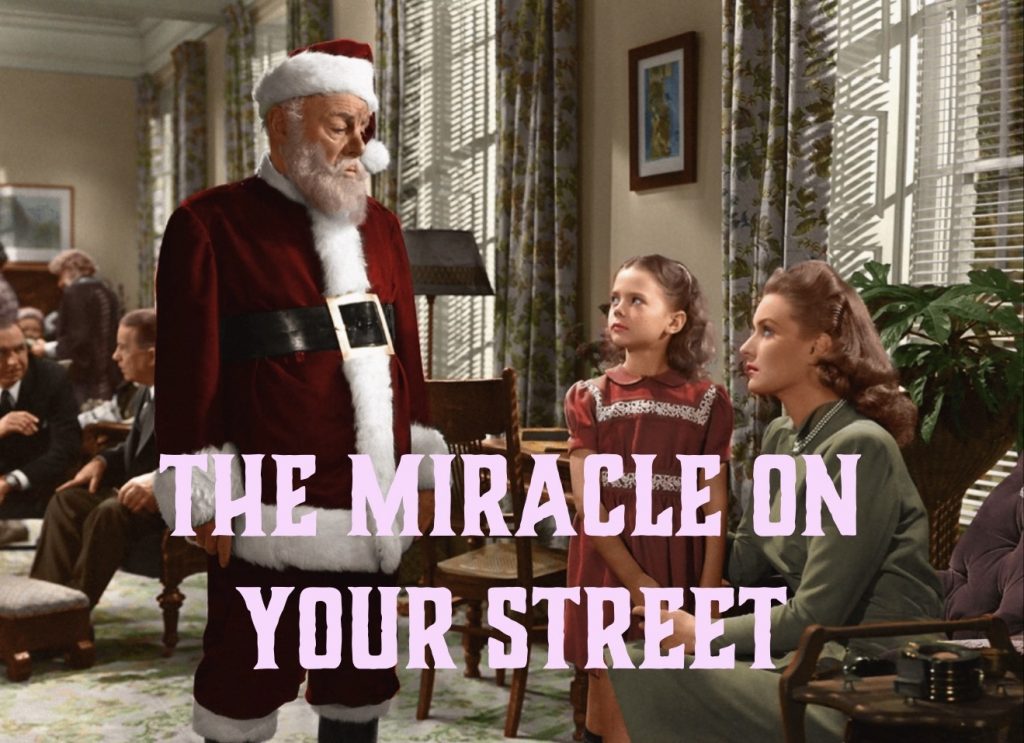
I always believed that it was a terrible idea to instruct children from the beginning that there is no Santa clause. To disallow any fantasy playing out in their minds about Santa, the Tooth Fairy, or the Easter Bunny seemed malevolent to me. Though I’m not sure it’s malevolent, it is condescending, elitist, and neglectful to their children to remove an important part of child development. Having believed it, that didn’t mean there was any evidence for it (not that I always need evidence beyond my own eyes).
The movie “Miracle on 34th Street” covers this topic. The child is taught by her mother to be realistic and not believe in fairy tales. The mother believed this would harm the child to find out it was all a lie. As the story goes, a miracle happens. I won’t spoil the rest, for those who haven’t seen it. Great movie.
Why Do Parents Do This?
But I have encountered many parents who have chosen to do just this, tell their kids from day one there is no Santa. Or Tooth Fairy. Or Easter Bunny. I believe there are reasons for this:
- The parents condescendingly believe their kid and their parenting are better than most others.
- The parent is afraid of being the bad guy when their kid finds out it’s a lie.
- The parent underestimates the benefit of imagination, fantasy, and creativity that dwells in the belief in such characters like Santa.
Condescending
There are many parents that simply think their kid can do no wrong. Subsequently, their kids can do no wrong because they are such good parents. Their kids would never bully, never be mean, never say anything societally unacceptable. Thus, their kids are above silly traditions that glorify fairy tales above reason. Their kids are just too smart for that. And it’s because they are too smart for that. An unfortunate result of this is the need for the child to tell everyone he knows so they too can avoid confusion. They bring this informaoitn to school and that evening a myriad of difficult conversations are taking place that become more of a letdown than simply allowing the child to learn naturally.
Afraid
Too many parents today are more friends than parents to their children. They are afraid of being seen as the bad guy if their kids find out Santa may not be real. This can only come about if they are basically worshipping their children and refusing to parent them but rather be their friend. This is so incredibly harmful to children. Trust me, I see the fruit almost every day. Those kids are “future clients.”
Underestimation
Sometimes, as parents, we underestimate kids’ ability to adjust and learn with enthusiasm. We assume their reaction will be the same as ours. We struggle to remember what it was like to be a kid. How such magic carried on with them throughout life.
I just read my favorite child development researcher’s take on this subject, and it clicked. For the record, the following words are my views only and may not necessarily represent the views of Dr. Laura Dimler. This is just me talking. So please do not harass her.
Let’s start with this quote from the article:
“Belief in Santa, the Tooth Fairy, or the Easter Bunny (or any other cultural fantastical figure) is not a failure to understand reality. It’s a developmentally normal outcome of how children learn to coordinate imagination with evidence.“
So this appears to me to be natural. Not a willing lie. Research shows that when the child moves within Jean Piaget’s stages of cognitive development from the preoperational stage (ages 2-7) to concrete operations (ages 7-12), they begin to apply causal reasoning which informs their belief system of reality vs fantasy. Prior to this full transition, there are studies that show children as young as 6 years old can differentiate “impossible” characteristics that should not apply to us but only to these fantasy characters, like flying or disappearing.
Dr. Dimler notes that during the preoperational stage, children remain capable of attributing natural and realistic explanations unless they are specifically told of the pretend mechanisms in place.
But my favorite part of the article was when she noted that children do not experience this colossal letdown effect that parents think they do. Research shows they experience a neutral or positive effect, as if to be proud they figured it out. This is because the discovery is gradual, not immediate. They piece clues together over time and make a landmark discovery, which boosts their confidence.
My Experiences – Home & Work
I can remember when I found out. I felt smart. Clever. Almost like I outsmarted my parents by catching them. It was fun. Unfortunately, my little brother is 3 years younger than me and he figured it out at the same time because he asked me questions approximately every 3 seconds of our lives and followed me while peeking out of our room to watch our parents put toys under the tree.
In the counseling room, when a parent asks about this subject, I have, before now, said, “Just let them be kids.” But didn’t really have ammunition to back that theory. It was common sense. Dr. Dimler provided such evidence in this article, though that may not have been her intention. Again, these are my thoughts, not necessarily hers.
Conclusion
Children develop naturally through imagination and fantasy. When we deny them that, we deny them the opportunity to hone skills they will use throughout their life. As Dr. Dimler noted, we continue to apply the skills in areas such as believing in luck. It is not “responsible” of you to deny your child the experience of believing in Santa, or the elf on the shelf. It is asocial deviance. Misanthropic contrarianism.
Such fantastical belief is a natural part of development. Let them have their own Miracle on 34th Street. What miracle? The miracle of child development.
Stay Classy GP!
Grainger